
WhatsApp Business API Myths You Need to Stop Believing in 2026
Over the past few years, WhatsApp has gone from a simple messaging app to a serious business tool. Brands are using it to send promotions, recover abandoned carts, confirm orders, answer support questions, and even close sales – all inside one chat thread.
And yet, despite its growth, confusion still surrounds the WhatsApp Business API.
Some businesses think it’s too complicated. Others believe it’s only for massive enterprises. A few assume it’s just another spam channel waiting to annoy customers. This has led to many brands either avoiding it completely or using it the wrong way.
In 2026, that’s a costly mistake you don’t want to make.
So, in this guide, we’re breaking down the most common WhatsApp Business API myths, and replacing them with facts that can help you make smarter decisions for your marketing, sales, and support strategy.
15 WhatsApp Business API Myths Busted
Myth #1: “Messaging Is Completely Free on the WhatsApp Cloud API”
This one pops up all the time.
Because Meta hosts the infrastructure for the WhatsApp Cloud API, many businesses assume that messaging itself is free. The logic sounds simple: if the servers are hosted by Meta, then there shouldn’t be any real costs, right?
But that’s not true.
While Meta does provide access to the Cloud API without charging you for hosting the infrastructure, messaging itself is still billed. WhatsApp operates on a conversation-based pricing model, meaning businesses pay for certain types of conversations (marketing, utility, authentication, etc.).
In other words, the platform access may be streamlined, but the conversations aren’t free.
If you’re planning your WhatsApp marketing budget in 2026, make sure you understand the conversation categories and pricing structure. Assuming it’s “free messaging” can lead to unpleasant surprises later.
Myth #2: “You Can Use the Same Number for Both On-Premise and Cloud API at the Same Time”
This is a hard no. Some businesses believe they can connect one phone number to both the on-premise WhatsApp Business API and the Cloud API simultaneously. That would be convenient, but it’s not how the system works.
You can use a number with either the Cloud API or the on-premise API – not both at once.
However, here’s the important clarification: you can migrate your number from on-premise to the Cloud API. Many businesses have done exactly that as they shift toward cloud-based infrastructure. So if you’re upgrading your setup, migration is possible. Dual usage at the same time is not.
Myth #3: “WhatsApp Can Read Your Business Messages”
This myth is rooted in misunderstanding how encryption works. Some businesses worry that because they’re using the WhatsApp Business API, their conversations are somehow less secure, or that WhatsApp can read and monitor their messages.
That’s not how it works.
WhatsApp uses end-to-end encryption. This means messages are encrypted when sent and can only be decrypted by the intended recipient. Even WhatsApp itself cannot read the content of those messages.
Think of it like a locked box. The message is scrambled during transmission, and only the recipient has the key to unlock it. So no, your business messages aren’t sitting in some open dashboard waiting to be read.
Myth #4: “The Cloud API Has Fewer Features Than the Business API”
Another common belief is that the Cloud API is somehow a “lighter” or restricted version of the WhatsApp Business API.
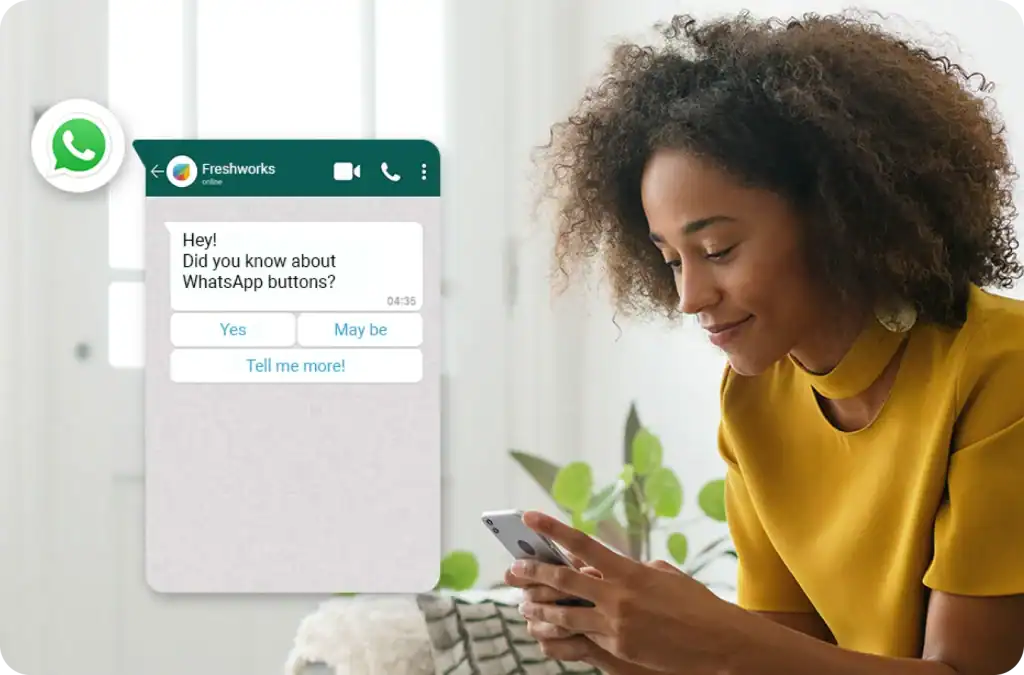
That’s misleading. The Cloud API is simply the hosted version of the WhatsApp Business API. Core features – such as template messaging, interactive buttons, media support, automation integrations, and webhooks – are available across both setups.
Yes, occasionally certain updates or enhancements may roll out in phases. But feature gaps are typically temporary and part of regular updates, not permanent limitations.
Assuming it’s “limited” could stop you from taking advantage of a setup that’s actually designed for flexibility and growth.
Myth #5: “WhatsApp Cloud API Doesn’t Protect Media Files”
Some businesses worry about what happens to the photos, videos, and documents they send through WhatsApp. If you’re sharing invoices, product images, or sensitive documents, it’s natural to ask: Where does that media go? Who can see it?
Here’s the reality.
Media shared via the WhatsApp Business API, including the Cloud API, is encrypted just like text messages. WhatsApp uses end-to-end encryption, which means only the sender and the recipient can access the content.
When media is transmitted, it’s temporarily stored only for delivery purposes. Once it reaches the recipient’s device, it’s removed from WhatsApp’s servers.
In simple terms: your media isn’t sitting around exposed. The same security principles that protect chats also protect images, PDFs, videos, and other files.
Myth #6: “Business Solution Providers (BSPs) Are No Longer Needed”
With the launch of the WhatsApp Cloud API, many assumed that third-party providers became irrelevant. After all, if Meta provides direct API access, why involve anyone else?
Here’s what’s often misunderstood: Meta provides API access, not a ready-made platform.
Accessing the API is only the first step. You still need infrastructure to manage campaigns, build automation, monitor conversations, track analytics, and integrate with your CRM.
That’s where Business Solution Providers (BSPs) and platforms come in. Instead of building everything from scratch, many businesses choose a solution provider that offers a dashboard, automation tools, analytics, and compliance management. For most growing brands, this dramatically reduces technical complexity and speeds up implementation.
Cloud access didn’t eliminate BSPs. It simply changed their role from gatekeepers to enablers.
Myth #7: “WhatsApp Has Access to Your Banking Details”
The rise of WhatsApp commerce and in-app payment features has triggered concern among some business owners. If customers are paying inside WhatsApp, does that mean WhatsApp has direct access to sensitive banking information?
No.
WhatsApp’s encryption framework protects transaction-related communication just like regular messages. Payment processes follow secure protocols, and banking details are not casually stored or shared.
Additionally, many businesses use secure checkout links or integrated payment gateways when completing transactions. This adds another layer of protection and ensures that financial data is handled according to compliance standards. So, using WhatsApp for commerce does not mean handing over your financial data to the platform.
Myth #8: “The On-Premise API Is Being Phased Out”
With the growing popularity of the Cloud API, some businesses assume the on-premise WhatsApp Business API is on its way out. That’s not accurate.
While many companies are shifting to the Cloud API for convenience and easier setup, the on-premise API still exists and continues to function. Businesses that prefer hosting their own infrastructure can still do so with the help of official WhatsApp partners.
The Cloud API offers simplicity and scalability. The on-premise API offers more control over infrastructure. Both models have their place. so, it’s not about one replacing the other. It’s about choosing the setup that fits your business needs.
Myth #9: “Chatbots and Broadcasts Are Illegal”
This myth often spreads from businesses that have seen accounts banned for misuse.
But let’s be clear: chatbots and broadcast messaging are not illegal.
What is against policy is using unofficial tools, scraping contact lists, or sending unsolicited spam.
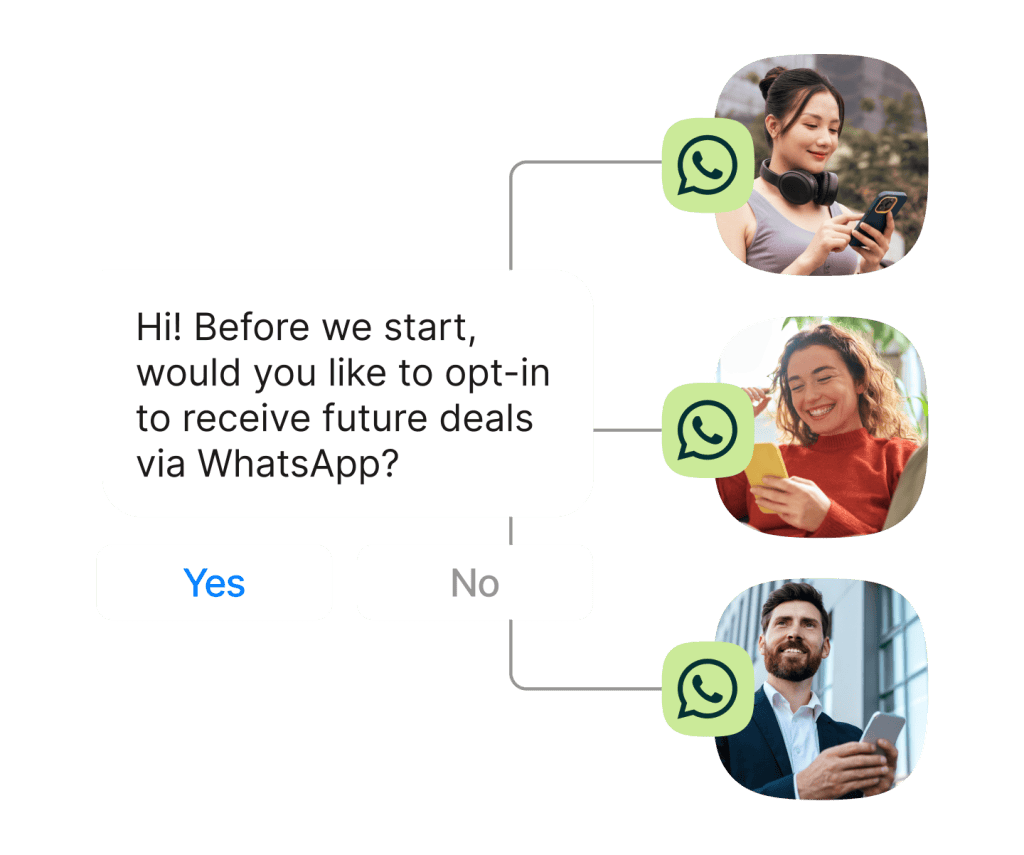
If you’re operating through the official WhatsApp Business API, collecting proper opt-ins, and using approved templates for outbound communication, you can absolutely run broadcast campaigns and deploy chatbots.
Conversational automation is a core part of WhatsApp commerce. The key is compliance.
When done correctly, chatbots help you respond faster, qualify leads, recover abandoned carts, and improve customer support – all within WhatsApp’s guidelines.
Myth #10: “WhatsApp Business API Is Only for Large Enterprises”
This one stops many small and mid-sized businesses from even exploring WhatsApp marketing. There’s a perception that the API is reserved for big brands with massive budgets and technical teams, especially when people hear about the “green tick” verification.
The truth is far more accessible.
Businesses of all sizes can apply for and use the WhatsApp Business API through official partners. Small e-commerce brands, local service providers, startups, and mid-sized companies are already using it successfully in 2026.
The API isn’t exclusive to enterprise players. It’s scalable. You can start small and expand as your messaging volume grows.
Myth #11: “You Can Only Send Transactional Messages as Broadcasts”
Some businesses assume that WhatsApp only allows order confirmations, OTPs, and delivery updates to be sent at scale. In other words, they believe broadcast messaging is restricted to purely transactional communication.
That’s not accurate.
WhatsApp allows different types of message categories, including marketing, utility (transactional), and authentication messages. The key requirement is not the type of message, but compliance. Outbound message templates must be submitted and approved before being used in campaigns.
So yes, you can send promotional messages, product launches, event invites, and re-engagement campaigns – as long as they follow WhatsApp’s guidelines and have approved templates.
The rule isn’t “transactional only.” The rule is “approved and opt-in only.”
Myth #12: “WhatsApp Business Is Only for Customer Support”
This is one of the most limiting myths out there. Because WhatsApp started as a communication tool, many businesses pigeonhole it into a support-only channel. But in 2026, WhatsApp is far more than a helpdesk.
Brands use it to:
- Capture and qualify leads
- Run personalized marketing campaigns
- Recover abandoned carts
- Share product catalogs
- Send limited-time offers
- Nurture prospects through conversational funnels
It’s just as powerful for marketing and sales as it is for support – sometimes even more.
Myth #13: “Setting Up the WhatsApp Business API Takes Months”
There’s a lingering belief that getting started with the WhatsApp Business API is a slow, complicated process filled with technical hurdles. That might have been partially true in the early days. It’s not the reality now.
With official partners and modern platforms, businesses can often go live within 24 to 48 hours, depending on documentation and verification requirements.
Verification, number setup, and template approval have become far more streamlined, especially with the Cloud API model.
So while planning your strategy may take time (as it should), the technical setup itself no longer needs to drag on for weeks.
Myth #14: “WhatsApp Business API Is Extremely Expensive”
Cost concerns scare many businesses away before they even explore their options. But the truth is, pricing depends on how you implement it.
WhatsApp charges based on conversation categories, and platform providers may charge setup or subscription fees. Some providers offer one-time onboarding fees, while others operate on monthly plans with bundled features.
For many growing brands, WhatsApp marketing ends up being more cost-efficient than paid ads or SMS campaigns, especially when conversion rates are factored in.
Like any tool, it can be expensive if misused. But strategically managed campaigns often produce strong ROI.
The myth isn’t that it costs money; it’s that it’s unaffordable. And that’s simply not the case for most businesses in 2026.
Myth #15: “Only One Person Can Manage WhatsApp Conversations”
This misunderstanding usually comes from confusion between the standard WhatsApp Business App and the Business API.
The regular WhatsApp Business App has limitations when it comes to multi-agent access. The Business API does not. With the right platform, multiple team members can:
- Reply to customers simultaneously
- Assign conversations internally
- Add internal notes
- Collaborate behind the scenes
- Manage high message volumes efficiently
In fact, multi-agent collaboration is one of the core strengths of the WhatsApp Business API.
For businesses handling significant inbound traffic, shared inbox functionality is essential and completely supported when using an official API setup.
Final Note
There’s no denying it – WhatsApp Business has transformed how brands connect with customers. What started as a simple messaging app has evolved into a powerful platform for marketing, sales, support, and full-scale conversational commerce.
Yet, as we’ve seen, myths and outdated assumptions continue to hold many businesses back.
When companies believe it’s too expensive, too complicated, insecure, or only meant for large enterprises, they miss out on one of the most engaging communication channels available in 2026. The truth is that WhatsApp Business API is secure, scalable, accessible, and incredibly effective when used correctly.
Understanding how it actually works, instead of relying on hearsay, is the first step toward unlocking its full potential.
If you’re ready to move beyond the myths and start using WhatsApp strategically, check out DMly.io and discover how conversational marketing and support can help you engage better, convert faster, and grow smarter in 2026.
Writing about WhatsApp automation, bookings and growth for local business.
Turn WhatsApp into your busiest channel.
Start free and run message, bookings, payments and reviews in one place.
