Prospecting hasn’t always been this complicated. But somewhere between endless email threads and unanswered cold calls, it became one of the hardest parts of sales.
Around 40% of sales reps say prospecting is the toughest part of the job, and it’s easy to see why. Closing a deal often takes multiple calls and several follow-ups, with no guarantee the conversation even starts.
That’s where WhatsApp changes the game. Prospecting on WhatsApp is faster, more direct, and far more conversational. Instead of chasing replies, you’re meeting prospects where they already are. With over 200 million businesses using WhatsApp Business to reach and convert customers, this is where real sales engagement is happening in 2026.
In this guide, we’ll break down how WhatsApp prospecting works and how you can use it to find and engage high-quality leads the smart way.
Why WhatsApp Is the Smartest Prospecting Channel in 2026
Prospecting works best when your message actually gets seen – and more importantly, answered. That’s exactly why WhatsApp has become such a powerful channel for sales teams in 2026.
Unlike email inboxes that are overflowing or cold calls that feel intrusive, WhatsApp sits right at the center of how people already communicate every day. Messages feel personal, timely, and easy to respond to, which naturally leads to better conversations and higher-quality leads.
What makes WhatsApp especially powerful is how it blends personal communication with automation. You can start genuine one-on-one conversations while still scaling your outreach – something email and cold calling struggle to balance. This combination leads to faster feedback, better engagement, and stronger ROI overall.
Let’s break down the key reasons WhatsApp works so well for prospecting:
1. Exceptional open and response rates
WhatsApp messages don’t sit unopened. With open rates as high as 98% and around 57% of messages receiving a response within a minute, prospects are far more likely to engage. That means fewer cold leads and more real conversations from the very first touchpoint.
2. A more human, personal channel
Prospecting on WhatsApp feels like a conversation, not a campaign. Prospects can reply instantly, ask questions, and move the discussion forward naturally. This one-on-one feel helps build trust much faster than email blasts or scripted calls.
3. Scales without losing the personal touch
Through broadcast lists, automation, and CRM integrations, sales teams can manage thousands of leads efficiently. You get the scale of modern sales tools, without sacrificing the personalized experience prospects expect.
4. Aligned with how customers prefer to communicate
Today’s buyers prefer quick, conversational interactions over formal outreach. WhatsApp fits perfectly into their daily habits, making it easier for brands to connect, engage, and convert, without feeling disruptive.
Just put it simply as, if prospecting is about starting meaningful conversations, WhatsApp gives you the best chance to do exactly that in 2026.
How WhatsApp Prospecting Works: A Practical, Step-by-Step Playbook
Knowing why WhatsApp works is one thing. Knowing how to actually use it to find and engage high-quality leads is where the real results come from. Below is a clear, practical breakdown of how WhatsApp prospecting works in real life.
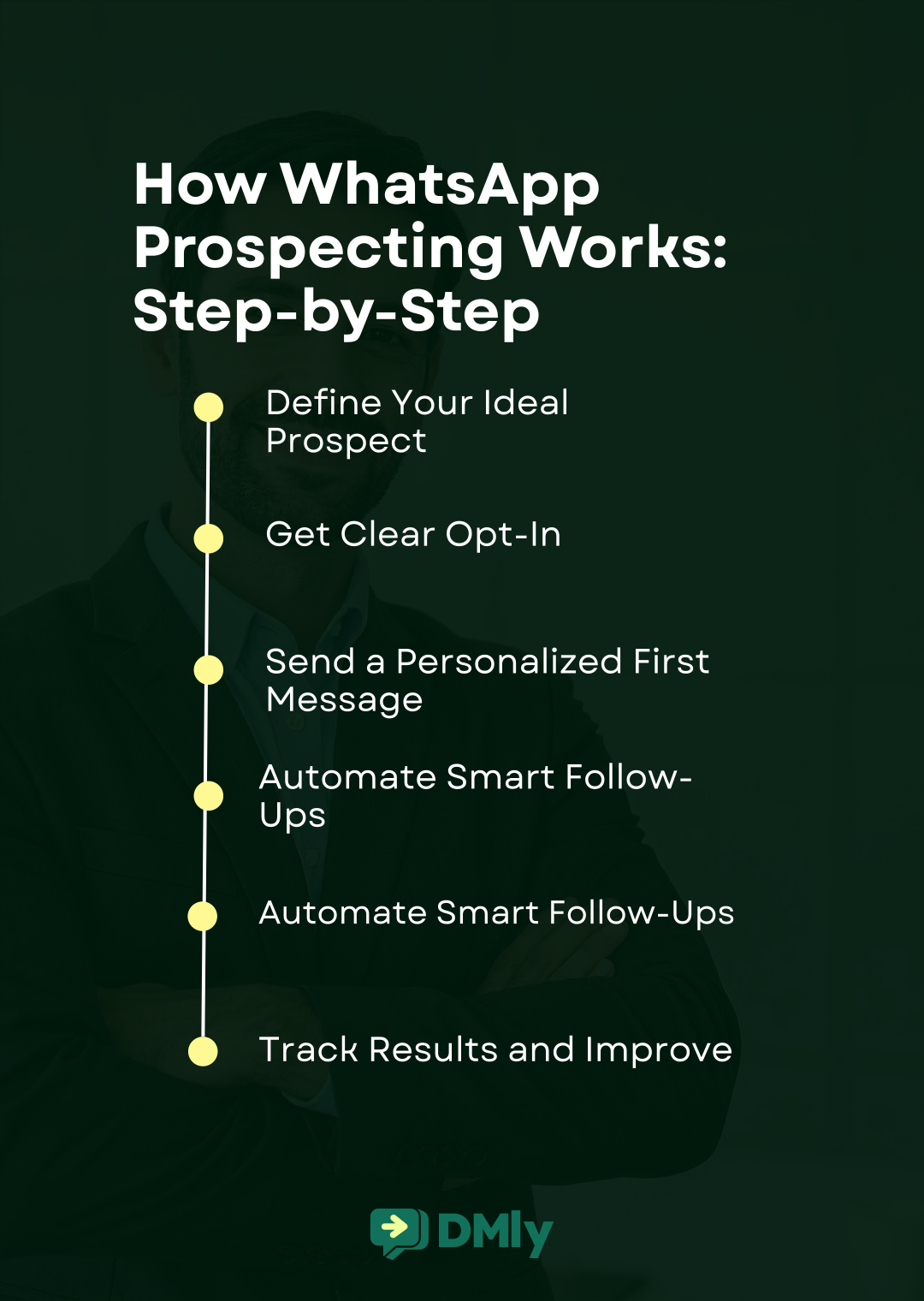
Step 1: Be Clear About Who You’re Prospecting (Define ICP + Segmentation)
Effective WhatsApp prospecting starts long before the first message is sent. It begins with clarity.
You need to define your Ideal Customer Profile (ICP) – the people most likely to need your product, respond to your message, and convert. This includes things like demographics, behavior, intent, and channel preferences.
For example, if you run a B2C skincare brand, your ICP might look like:
- Women aged 25-35
- Interested in clean beauty
- Regularly engage with skincare content on Instagram
- Have purchased skincare products online in the last 6 months
Once you know who you’re targeting, the next move is segmentation. Instead of sending one generic message to everyone, you group prospects based on shared traits, so every message feels relevant and personal to the person receiving it.
Prospects are far more likely to respond when the message clearly speaks to their needs, not “everyone’s” needs.
Step 2: Lock Down Opt-In and Stay 100% Compliant
WhatsApp prospecting only works when trust is intact. That means opt-in is non-negotiable.
Before messaging anyone, you must ensure they’ve explicitly agreed to receive WhatsApp communication from your business. This protects your sender reputation, keeps your account safe, and ensures prospects don’t see your messages as spam.
A simple example:
- A user fills out a form on your website
- You include a checkbox that says:
“I agree to receive updates and offers on WhatsApp.” - Once confirmed, you send a short welcome message like:
“Thanks for signing up! You’ll now receive updates and offers right here on WhatsApp.”
That single confirmation sets the tone for everything that follows. Prospects know who you are, what to expect, and why you’re messaging them, making future conversations smoother and more effective.
Note: Always keep a record of opt-ins (date, time, and source). This keeps you fully aligned with WhatsApp Business policies and protects your outreach long-term.
Step 3: Write Messages That Sound Human (Not Like a Campaign)
This is where many WhatsApp prospecting efforts either win or fall flat.
Your first outreach message should feel like it was written for one person, not copied and pasted to a list. The goal isn’t to sell immediately. It’s to spark a reply.
Use what you already know about the prospect to add context and relevance. That could be:
- Something they viewed on your website
- A form they filled out
- An ad they clicked
- A problem they’re actively trying to solve
For example, instead of a generic opener, you might say:
“Hi Joan. I saw you were exploring our summer collection earlier. Want me to share a few outfit ideas our customers are loving right now?”
Short, friendly, and specific. That’s the sweet spot. It reads like a real conversation and gives the prospect an easy reason to reply.
For this, you might want to create 2-3 variations of your outreach message. Keep the core message the same, but tweak the opening line based on user behavior or source. This saves time and improves response rates.
Step 4: Automate Follow-Ups
Most prospects don’t reply to the first message. Not because they’re uninterested, but because they’re busy. That’s why follow-ups are essential.
The difference with WhatsApp is how you follow up. Instead of repetitive nudges, smart automation lets you continue the conversation naturally based on what the prospect does (or doesn’t do).
For example:
- If someone doesn’t reply after 48 hours, you can trigger a gentle check-in
- If they click a link but don’t respond, you can send a value-based follow-up
- If they ask a question, automation can route the conversation or suggest next steps
A simple follow-up might look like:
“Hey Riya, just wanted to check if you had a chance to look at the options I shared earlier.”
No pressure. No spam. Just a friendly continuation of the conversation.
You can space follow-ups 2-3 days apart and alternate between reminders and value, such as a quick tip, testimonial, or helpful insight. That way, every message earns its place in the chat.
Step 5: Measure What’s Working and Fix What Isn’t
WhatsApp prospecting isn’t guesswork. The real advantage comes from tracking performance and improving over time.
Pay close attention to:
- Open rate – Are your messages getting seen?
- Response rate – Are people engaging back?
- Conversion rate – Are conversations turning into real outcomes?
If your messages are being opened but not replied to, your opening line likely needs work. If replies are strong but conversions are low, your follow-up or offer may need refining.
The beauty of prospecting on WhatsApp is how quickly you get feedback. You can test different messages, timing, and segments – and adjust almost instantly.
WhatsApp Prospecting Campaigns That Actually Convert
Once you understand how WhatsApp prospecting works, the next step is knowing what kind of campaigns to run.
Different moments in the buyer journey call for different types of conversations. So, you need to know what types of campaigns there are, and which to use at a specific time. Here are some popular ones:
1. First-Contact Outreach Campaigns (Starting the Conversation)
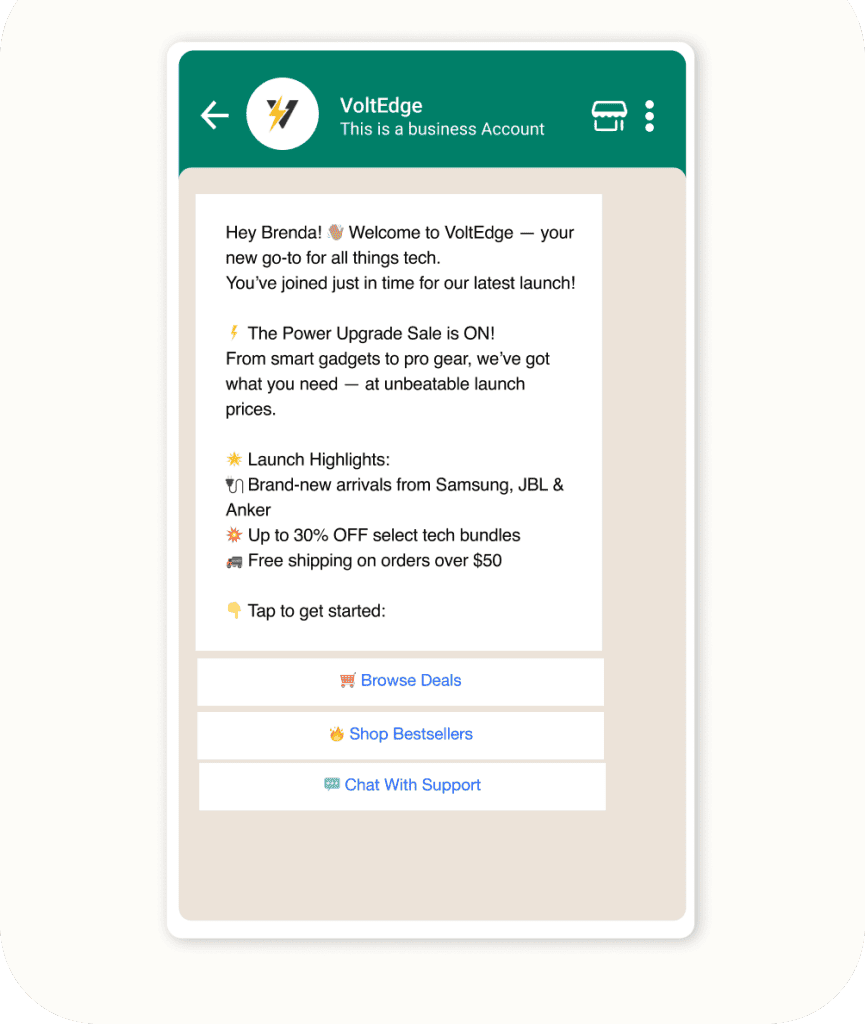
This is the most common – and most important – type of WhatsApp prospecting campaign. It’s your very first interaction with a potential customer who has already shown some level of interest.
The goal here isn’t to sell aggressively. It’s to introduce your brand, set expectations, and give the prospect an easy reason to reply.
For example, imagine a consumer tech brand welcoming new leads who signed up through a product waitlist or ad. Instead of a long pitch, the brand sends a short, friendly WhatsApp message that:
- Welcomes the prospect
- Highlights what makes the brand worth paying attention to
- Offers simple action buttons like Browse Deals, Shop Bestsellers, or Chat with Support
Because this happens on WhatsApp, prospects can tap, reply, or ask questions instantly – no forms, no friction, no delays. That’s how you turn “interest” into an actual conversation.
Best used when:
- A user signs up through a form or landing page
- Someone clicks a Click-to-WhatsApp ad
- A lead downloads content or requests more information
2. Demo, Consultation, or Appointment Reminders
Not every prospect needs convincing. They just need a timely nudge.
WhatsApp excels at reminders because messages are read almost immediately and feel far more personal than emails. This makes it perfect for demo confirmations, consultation reminders, or appointment follow-ups.
For example, a skincare or wellness brand offering virtual consultations might send something like:
“Hi Riya. Just a reminder about your skincare consultation today at 4 PM. Reply YES to confirm or RESCHEDULE if you need to move it.”
It’s simple, polite, and actionable. Prospects don’t need to search their inbox or click through links. They can respond right in the chat.
This type of campaign reduces no-shows, keeps the conversation warm, and builds trust through clear, respectful communication.
Best used when:
- A prospect books a demo or call
- You want to confirm attendance
- You need quick responses without back-and-forth emails
3. Personalized Recommendations & Product Sharing Campaigns
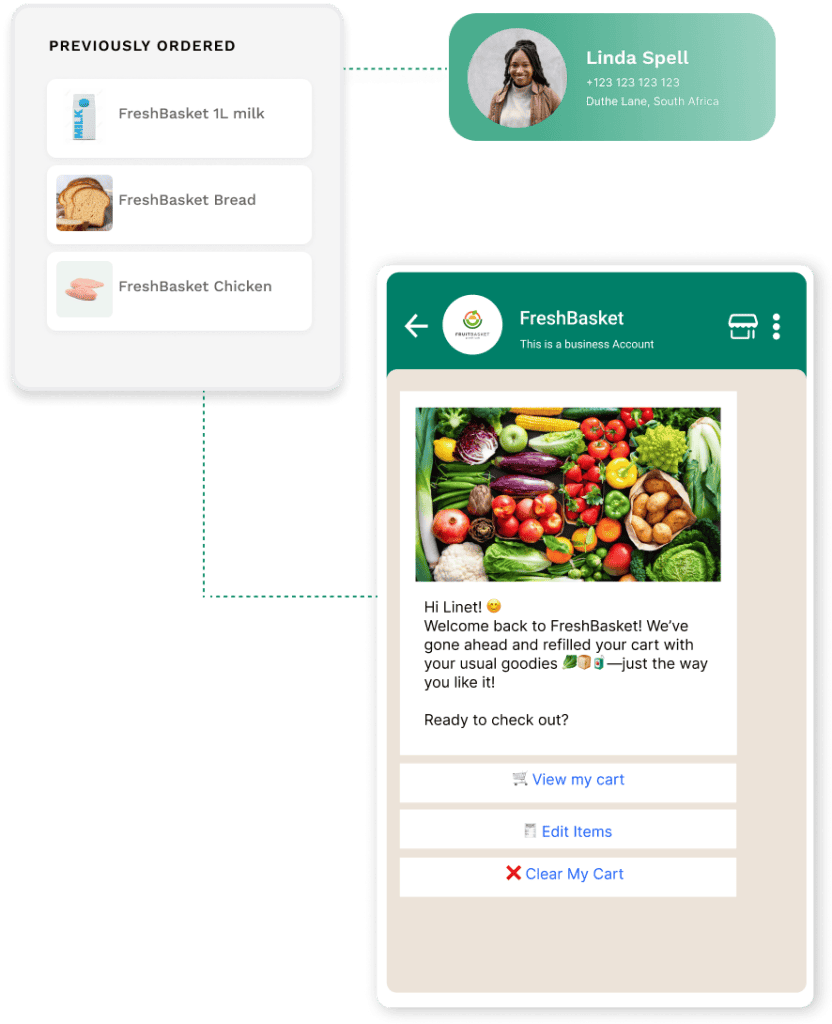
Once a prospect has replied or shown interest, this is where WhatsApp really starts to shine. Instead of pushing a generic sales message, you can guide the conversation with relevant recommendations that feel tailored, not forced.
Think of this as helping, not selling.
For example, an e-commerce or subscription brand can use past behavior to suggest next steps. A returning customer might receive a WhatsApp message that:
- Greets them by name
- References what they previously viewed or bought
- Shares a short list of relevant products, a brochure, or even a quick explainer PDF
Because the conversation happens on WhatsApp, prospects can instantly ask follow-up questions like “Does this come in another size?” or “What’s the delivery time?” – all without switching platforms.
This type of campaign builds confidence. It reassures prospects that you understand their needs and reduces hesitation by putting the right information in front of them at the right time.
Best used when:
- A prospect has already engaged once
- You want to move them closer to a decision
- You’re offering multiple options and want to simplify choice
4. Event or Exclusive Invites
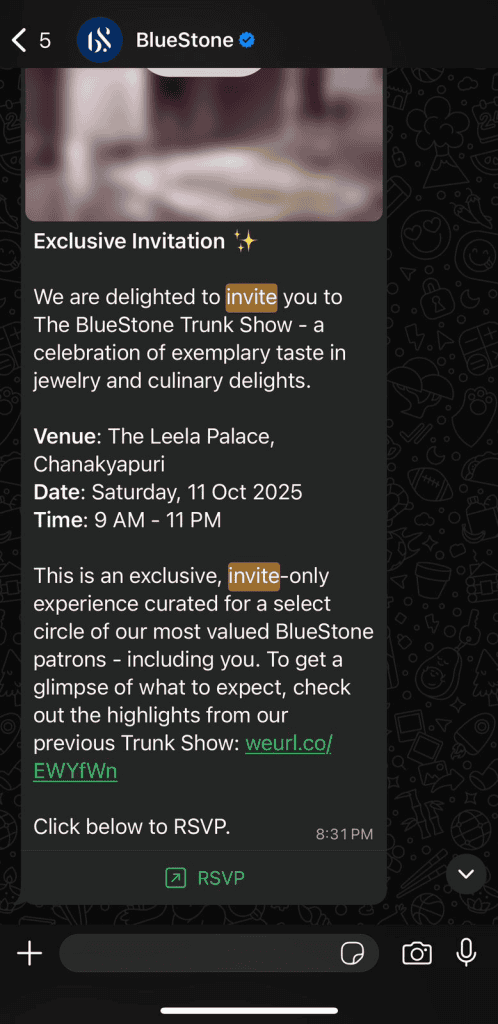
If you want attention, WhatsApp is hard to beat, especially for time-sensitive invites.
Event and webinar invitations sent via WhatsApp feel more personal than email and are far less likely to be ignored. Instead of getting buried in an inbox, the invite appears alongside everyday conversations, making it feel relevant and immediate.
For example, a brand hosting a webinar, product launch, or in-store event can send a short WhatsApp invite that:
- Clearly states what the event is about
- Explains why it’s valuable to attend
- Includes a simple RSVP or Register link
This approach works particularly well for exclusive or limited-access events. Prospects feel personally invited, not mass-marketed to – which naturally boosts attendance and engagement.
5. Post-Meeting Follow-Up Campaigns
The conversation shouldn’t end when the call does. In fact, for many deals, what happens after the meeting is what determines whether a prospect moves forward or quietly disappears.
WhatsApp is perfect for this moment because it keeps the interaction warm and personal without feeling pushy. A short follow-up message can reinforce value, clarify next steps, and remove friction while the conversation is still fresh.
For example, after a sales call or demo, a business can send a message like:
“Hi Karan, great speaking with you earlier. I’ve shared the proposal we discussed – happy to answer any questions or tweak things based on your goals.”
Because this follow-up happens on WhatsApp, prospects are far more likely to open it, reply quickly, and continue the discussion. You can also attach documents, links, or summaries directly in the chat, making it easier for them to review and decide.
Best used when:
- Following up after sales calls, demos, or consultations
- Sharing proposals, itineraries, or next steps
- Keeping momentum alive without overwhelming the prospect
6. Click-to-WhatsApp Ads
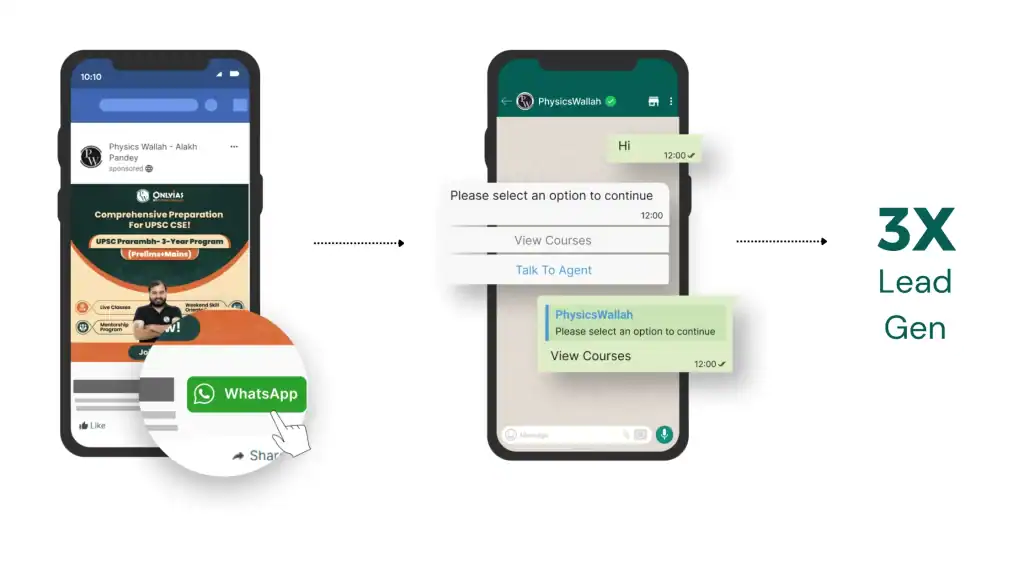
Click-to-WhatsApp ads take prospecting beyond outbound messages and bring high-intent leads directly into chat.
Instead of sending users to a landing page or form, these ads – run on Facebook and Instagram – include a “Chat on WhatsApp” button. When a prospect clicks it, a WhatsApp conversation opens instantly. No friction. No guessing how to contact you.
This format works because it matches how people already behave. When interest is high, prospects want answers immediately, not another page to scroll through.
With a platform like DMly, you can:
- Route incoming ad leads automatically
- Trigger instant welcome messages
- Qualify prospects with smart questions
- Track which ads generate real conversations and conversions
Click-to-WhatsApp ads blend paid reach with conversational selling, making them one of the most powerful prospecting campaigns for 2026.
This type of prospecting campaign is best used for generating new inbound leads at scale or running promotions, launches, or limited offers. It is also perfect for shortening the path from interest to conversation.
Read: Click to WhatsApp Ads Complete Guide
Best Practices for WhatsApp Prospecting in 2026
WhatsApp prospecting works best when it feels human, respectful, and intentional. Below are six proven best practices that will help you engage prospects the right way, without getting ignored, blocked, or reported.
1. Always Lead with Permission (Opt-In Is Non-Negotiable)
WhatsApp is a personal space. Treat it that way.
Before sending any prospecting message, make sure the person has explicitly opted in to hear from you. This could be through a website form, a click-to-WhatsApp ad, an event registration, or a prior conversation. Starting chats without consent is the fastest way to lose trust, and your sender reputation.
What to do right:
- Clearly state what type of messages they’ll receive
- Store opt-in records (source, time, and purpose)
- Send a short confirmation message after opt-in
When prospects expect your message, they’re far more likely to respond positively.
2. Keep Messages Short, Personal, and Conversational
If your message looks like a campaign, it’ll be treated like one – ignored.
The best WhatsApp prospecting messages read like they were typed by a real person, not copied from a marketing doc. Use the prospect’s name, reference their interest or action, and keep your tone friendly and natural.
Good WhatsApp messages ask one clear question, get to the point quickly, and sound like something you’d say out loud. Think conversation starter, not sales pitch.
3. Segment Before You Send
Sending the same message to everyone is a waste of time and opportunity. Strong WhatsApp prospecting relies on smart segmentation. Group prospects based on things like:
- Source (ad, website, event, referral)
- Industry or use case
- Stage in the buying journey
- Past interactions or interests
When your message aligns with what the prospect actually cares about, replies feel natural—not forced.
4. Use Automation, But Don’t Lose the Human Touch
Automation helps you scale. Humanity helps you close. Automate the repetitive parts of prospecting, such as welcome messages, follow-ups, and reminders, but leave room for real conversations when prospects engage. The goal is to respond fast without sounding robotic.
Best balance:
- Automate first touch and follow-ups
- Hand off to a human when interest is shown
- Personalize responses using context from the chat
Automation should support your sales team, not replace them.
5. Follow Up Consistently Without Being Pushy
Most prospects won’t reply to the first message, and that’s normal. What matters is how you follow up. Space your follow-ups thoughtfully and always add value. A gentle reminder, a helpful resource, or a relevant insight works far better than “Just checking in.”
Follow-up tips:
- Wait 2-3 days between messages
- Alternate between value and reminders
- Stop after a reasonable number of attempts
6. Track What Matters and Improve Constantly
WhatsApp prospecting isn’t “set and forget.” Pay attention to metrics that actually reflect success:
- Response rate (engagement)
- Conversation-to-meeting ratio
- Conversion rate
- Time to first response
If messages are opened but not replied to, refine your opening line. If conversations start but don’t convert, review your questions or timing. Data helps you turn good prospecting into great prospecting.
How DMly Makes WhatsApp Prospecting Easier and More Effective)
WhatsApp prospecting sounds simple on paper. In reality, it’s hard to do well at scale. Following up on time. Keeping conversations personal. Knowing which leads are warm and which ones need a nudge.
DMly is an all-in-one WhatsApp marketing and sales automation platform built to help sales teams turn WhatsApp chats into real opportunities, without juggling spreadsheets, reminders, or multiple tools. Everything happens in one place.
You can reach out to new leads, continue ongoing conversations, automate follow-ups, and track responses in real time. It removes the chaos from prospecting and replaces it with a clear, repeatable system that actually helps you close deals.
Key DMly Features for WhatsApp Prospecting
Here’s how DMly supports every stage of your WhatsApp prospecting workflow:
Pre-built outreach templates
DMly comes with ready-made message templates for common prospecting moments. Think first outreach, demo invites, gentle follow-ups, and post-meeting messages. Each template is designed to sound natural and supports dynamic fields like names, companies, or products, so messages still feel personal.
Smart follow-ups and reminders
Following up manually is tiring and inconsistent. With DMly, you can automate follow-ups based on behavior. If a prospect doesn’t reply, the system sends a polite nudge. If they engage, it can trigger the next message automatically. Your pipeline keeps moving, even when your team is busy.
CRM integrations for full visibility
DMly connects directly with your CRM, so every WhatsApp conversation is logged automatically. Messages, replies, and engagement history are all synced. This gives your sales team full context before jumping into a conversation and helps managers track what’s working and what isn’t.
WhatsApp Flows for end-to-end journeys
With DMly’s no-code WhatsApp Flows, you can automate entire prospecting journeys. Welcome new leads, qualify them with quick questions, share relevant offers, and route hot prospects to a human agent at the right moment. It’s automation that still feels human.
DMly Pricing
DMly offers flexible plans designed to fit different business stages:
- Starter: $29/month
- Standard: $89/month
- Premium: $299/month
Whether you’re just starting with WhatsApp prospecting or running high-volume sales conversations, there’s a plan that fits.
If you’re serious about turning WhatsApp into a reliable prospecting channel in 2026, DMly gives you the structure, automation, and insight you need to do it right, without losing the personal touch that makes WhatsApp work so well.
Final Thoughts
WhatsApp prospecting in 2026 is no longer about sending messages and hoping for replies. It’s about starting the right conversations, at the right time, with the right people. When done well, WhatsApp becomes one of the fastest and most human ways to build trust, qualify leads, and move prospects toward a decision.
With the right strategy and a platform like DMly supporting your efforts, prospecting stops feeling chaotic. You get structure without losing flexibility, automation without sounding robotic, and visibility into what’s actually driving results.
If you’re looking to find and engage high-quality leads where they already spend their time, WhatsApp prospecting is a channel you can’t afford to ignore.
Frequently Asked Questions
What is WhatsApp prospecting?
WhatsApp prospecting is the process of finding, reaching out to, and engaging potential customers through WhatsApp. It focuses on conversational outreach rather than cold calls or long email threads.
Is WhatsApp prospecting legal?
Yes, as long as you follow WhatsApp’s business policies. This means getting clear opt-in from contacts, using approved templates when required, and respecting privacy and data protection rules.
Can small businesses use WhatsApp for prospecting?
Absolutely. WhatsApp prospecting works well for small teams because it’s personal, affordable, and scalable. With automation tools, even small teams can handle large volumes of conversations efficiently.
What types of businesses benefit most from WhatsApp prospecting?
E-commerce brands, SaaS companies, service providers, real estate firms, and B2B sales teams all benefit. Any business that relies on direct conversations to convert leads can use WhatsApp effectively.
How do I avoid sounding spammy when prospecting on WhatsApp?
Focus on relevance and timing. Segment your audience, personalize your messages, keep them short, and always provide value before pushing for a sale. Opt-in is also critical.
Do I need a tool to run WhatsApp prospecting?
If you’re handling more than a handful of leads, yes. A platform like DMly helps you automate follow-ups, track conversations, manage templates, and integrate with your CRM so nothing slips through the cracks.