
Customers don’t “contact support” anymore. They send a message. Sometimes it’s a quick question. Sometimes it’s the moment they decide to buy.
And more often than not, it happens on WhatsApp, Instagram, or another chat app they already live in. That small shift has quietly changed how businesses grow, sell, and stay relevant.
In 2026, messaging is no longer a side channel. It’s the front door. New tools, smarter automation, and rising customer expectations are forcing brands to rethink how conversations are handled at scale.
In this guide, we’ll break down the key trends shaping the future of business messaging and what you can do now to stay ahead instead of scrambling later.
12 Major Trends Shaping the Future of Business Messaging in 2026
Trend 1: AI Agents Will Turn Messaging into a Two-Way Growth Channel

For a long time, business messaging has been one-directional. Brands talk. Customers receive. That model is already cracking, and by 2026, it will feel completely out of step with how people want to engage.
AI agents are the reason. They make it possible to move from broadcasts to conversations at scale. Not just auto-replies, but real back-and-forth exchanges where customers can ask questions, explore options, and take action without leaving the chat.
Messaging platforms like WhatsApp stop being announcement boards and start acting like interactive storefronts and support desks combined.
As AI agents become more context-aware, they’ll handle growing volumes of conversations without sacrificing relevance. Customers won’t just receive information. They’ll participate. And brands that still rely on one-way notifications will struggle to hold attention in a world that expects dialogue.
How brands can start preparing for this shift:
- Audit your current messages and identify where one-way updates could become interactive
- Introduce AI-driven replies for common questions to encourage back-and-forth engagement
- Choose messaging tools that support true two-way conversations at scale
- Test interactive elements like quick replies, choices, and in-chat actions
Trend 2: AI Agents Will Evolve from Simple Cost Savers to True Revenue Drivers
Customer conversations have traditionally been treated as a cost center. The faster they end, the better. Shorter handle times. Fewer messages. Lower overhead.
That thinking is about to change.
By 2026, AI agents will be judged less on efficiency and more on impact. They’ll help customers choose the right product, guide them through onboarding, sense frustration before churn happens, and recommend next steps at the right moment. Conversations won’t just be resolved. They’ll create value.
This shift is being driven by better AI models that can understand tone, intent, and context more naturally. As these agents get better at handling important conversations, brands will realize that messaging is one of the most direct revenue opportunities they have.
The question won’t be “How fast did we close the chat?” It will be “What did this conversation achieve?”
How can you prepare your business for this change? Here are a few ideas:
- Move beyond efficiency metrics and track outcomes like conversions and retention
- Pilot AI in high-impact moments such as onboarding, renewals, and pricing questions
- Train AI agents with real product and customer data, not generic scripts
- Give human teams visibility into AI-handled conversations for better handovers
- Align sales, support, and marketing around shared conversation goals
Trend 3: Visual and Video Messaging Will Become Core
Text alone won’t carry business conversations much longer. As digital fatigue grows, visual and video communication are stepping in as the faster, clearer way to connect.
Moving forward, video won’t be limited to meetings. It will show up inside everyday messaging flows. Short video replies. Product walk-throughs sent in chat. Screen recordings explaining an issue instead of typing paragraphs.
Different social media channels already support rich media, and customers are responding to it.
This year, VR and AR will push this even further. From immersive product demos to virtual collaboration spaces, visual communication will make remote interactions feel closer to face-to-face. The brands that stand out will be the ones that show, not just tell.
Here’s how brands can start preparing for a more visual messaging future:
- Normalize video replies for sales, onboarding, and support
- Equip teams with simple tools for recording and sharing short videos
- Experiment with visual product demos inside chat
- Train teams to communicate clearly on camera, not just in writing
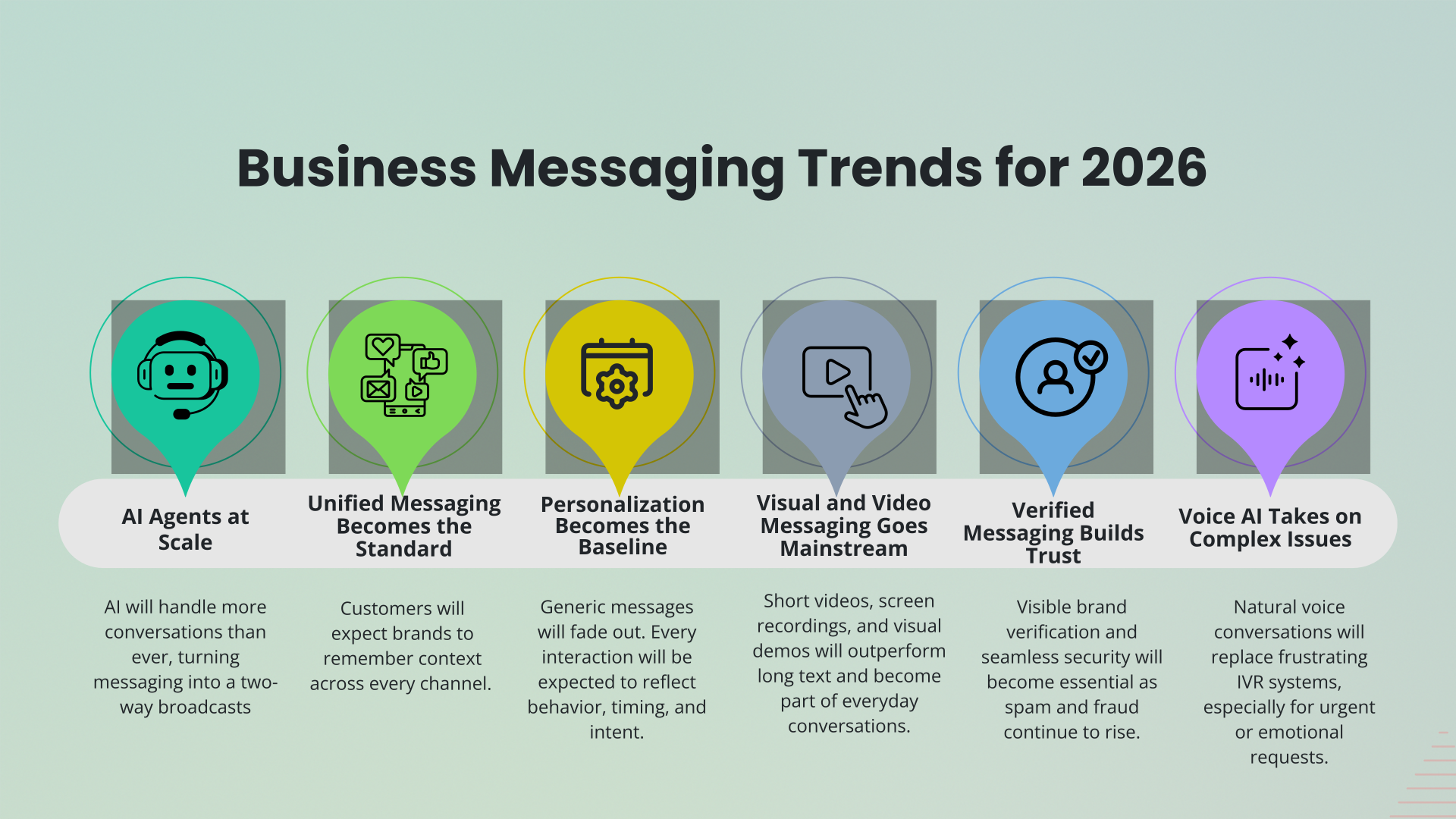
Trend 4: Voice AI Will Become the Go-To for Complex Conversations
When something is confusing, emotional, or urgent, people don’t want to type. They want to talk. For years, automation made that worse, not better. IVR menus, long holds, and robotic voices trained customers to avoid calling altogether.
That’s changing fast. By 2026, Voice AI will finally feel natural. Speech-to-speech models are closing the gap with human response times, and systems are learning to understand intent, tone, and context in real time.
Instead of pressing buttons or repeating themselves, customers will explain issues in plain language and be understood immediately. Voice AI won’t replace humans, but it will handle complexity more gracefully than text ever could.
How can your brand start preparing for Voice AI adoption? Here are some ideas:
- Identify customer moments where typing is a poor experience
- Pilot Voice AI in one high-impact use case
- Shift success metrics toward resolution and satisfaction
- Combine Voice AI with messaging so conversations can move between channels
- Collect feedback early and refine continuously
Trend 5: Connected Customer Journeys Will Drive Loyalty, Not Discounts
Loyalty isn’t built on points or promo codes anymore. It’s built on continuity. Customers expect brands to remember them, no matter where a conversation starts or continues.
By 2026, disconnected conversations will feel unacceptable. Starting a chat on Instagram and having to repeat the same details on WhatsApp will instantly break trust. People want brands to carry context across channels, teams, and touchpoints without friction.
AI will play a quiet but powerful role here. Conversations will be summarized automatically. Context will follow the customer. Human agents will join chats already informed, not scrambling to catch up. When customers feel recognized and understood, they stick around longer.
Here are some ways brands can start preparing for connected customer journeys:
- Map how customers move between channels and identify where context is lost
- Invest in a unified inbox that shows full conversation history
- Align marketing, sales, and support around a single customer view
- Use AI to summarize and pass context between agents and teams
Trend 6: Personalized Messaging Will Become the Baseline, Not the Advantage

Generic messaging is already easy to ignore. In 2026, it will be easy to distrust. Customers will expect messages to reflect who they are, what they’ve done, and what they care about.
Personalization will go far beyond using a first name. AI will help brands tailor content, timing, tone, and channel choice based on behavior and context.
Messages will arrive when they’re useful, not when campaigns are scheduled.
This shift matters because relevance builds relationships. When messages feel timely and specific, customers engage. When they feel random, they opt out.
Brands that want to plug into this trend and make the most of it early enough should:
- Consolidate customer data across channels and tools
- Use AI to analyze behavior, not just demographics
- Test contextual messaging based on timing and intent
- Replace bulk blasts with segmented, behavior-led campaigns
- Review your messaging tone to ensure it adapts by use case
Trend 7: Regional communication Strategies Will Separate Global Leaders from Everyone Else
A single global messaging playbook rarely works. Channel preferences, language norms, and trust signals vary widely by region, and customers notice when brands get it wrong.
By 2026, successful global brands won’t copy-paste campaigns across markets. They’ll combine a central strategy with local execution. The goal is to achieve significant relevance at scale.
This means understanding not just which channels dominate in each region, but how people prefer to communicate, what feels respectful, and what builds trust locally.
Here’s how you can make sure your business is prepared for a global messaging strategy in 2026:
- Research channel preferences market by market
- Work with local experts who understand culture and compliance
- Build flexible messaging frameworks, not rigid scripts
Trend 8: Conversational Messaging Will Redefine What “Good Communication” Means
One-way messages are losing patience fast. People have experienced conversational AI in their personal lives, and now they expect the same from brands.
Soon, every message will be an invitation to respond. Updates, alerts, promotions, and confirmations will all be expected to support follow-up questions or actions. When a message can’t be replied to, it will feel broken.
Richer channels like WhatsApp and RCS are accelerating this shift by making messaging interactive. Buttons, suggested replies, carousels, and embedded media turn static notifications into living conversations.
How brands can start preparing for conversational messaging
- Audit existing one-way messages and make key ones interactive
- Design messages with follow-up questions in mind
- Use visual elements to guide action inside conversations
- Ensure teams and AI are ready to respond in real time
Trend 9: Verified and Secure Messaging Will Become a Trust Requirement
Trust is getting harder to earn. Spam, scams, and fake messages have made customers cautious, even when legitimate brands reach out. Research shows that 53% of consumers have received legitimate brand messages they initially found suspicious, creating a major barrier to trust.
By 2026, trust won’t be assumed. It will need to be proven.
Verified sender profiles, official brand badges, and visible authentication will become standard. Customers will expect clear signals that a message is real before they engage. At the same time, security must stay invisible. Extra protection without extra friction.
Brands that make authenticity obvious and security seamless will stand out in crowded inboxes. Around 50% even say they feel more secure when these extra steps exist.
Here’s how you can prepare for this reality:
- Use official, verified messaging channels wherever possible
- Make brand identity consistent and recognizable in every message
- Educate customers on how to spot legitimate communications
- Implement secure authentication that doesn’t interrupt the conversation
Trend 10: Faster Networks Will Raise the Bar for Real-Time Messaging

As 5G becomes more widespread, slow or clunky communication will feel increasingly out of place. Faster speeds and lower latency won’t just improve video calls. They’ll change expectations around messaging, too.
By 2026, customers will expect richer, more immediate interactions inside chat. High-quality media, real-time updates, interactive experiences, and instant responses will become normal.
Messaging won’t just be text-based. It will feel live, responsive, and fluid, especially on channels like WhatsApp.
For brands, this means messaging experiences that feel sluggish or limited will stand out for the wrong reasons. Speed will become part of perceived quality.
How brands can start preparing for this shift:
- Upgrade messaging tools to support rich media and interactive content
- Design conversations that assume instant delivery and response
- Prepare teams for higher message volume driven by faster interactions
- Test real-time use cases like live support, demos, or guided shopping
Trend 11: Intelligent Inboxes Will Reward Relevance and Punish Noise
Inbox fatigue is real. For years, brands relied on basic personalization to stand out. First names. Broad segments. Slightly tweaked subject lines. That won’t be enough by 2026.
Research shows that 42% of consumers expect personalized promotions, and nearly 30% expect brands to use their purchase history to make messages more relevant.
Inboxes are getting smarter. AI-driven filtering, summarization, and prioritization will decide which messages deserve attention and which never get seen. Relevance will no longer be optional. It will be enforced.
This applies beyond email. Messaging channels will increasingly prioritize value-driven communication. Brands that send timely, useful messages based on real behavior will stay visible. Those that don’t will quietly disappear from view.
Trend 12: Communication Skills Will Become a Competitive Advantage
As automation and AI handle more routine conversations, the quality of human communication will matter more, not less. The conversations that reach human teams will be higher-stakes, more emotional, and more complex.
This year, brands that invest in communication training will stand out. Not just in sales or leadership, but across support, marketing, and operations. Clear writing. Confident tone. Empathy. The ability to guide a conversation forward without friction.
Messaging is becoming the primary interface between businesses and customers. That makes communication skills a strategic asset, not a soft skill.
How can brands start preparing for higher-impact conversations?
- Train teams to write clearly and confidently in chat-based environments
- Standardize tone and language across channels without sounding scripted
- Coach teams on handling sensitive or high-value conversations
- Encourage collaboration between humans and AI, not competition
How Platforms Like DMLY Help Brands Get Ready for the Messaging Future
Trends are only useful if you can actually act on them. Faster networks, AI-driven conversations, connected journeys, and rising expectations all sound great on paper. In practice, they require the right foundation.
DMLY is built around the idea that modern messaging needs to be unified, intelligent, and scalable. It brings channels like WhatsApp, Instagram, Messenger, Telegram, and web chat into one inbox, so conversations stay connected no matter where they start.
This directly supports the shift toward continuous customer journeys and reduces the friction that breaks trust.
AI agents inside DMLY help brands prepare for the explosion in conversation volume. They handle routine questions, qualify leads, and respond instantly, while still handing off to humans when nuance or empathy is needed. That balance is exactly what future-facing messaging demands: speed without losing the human feel.
DMLY also supports smarter automation, personalized workflows, and compliant messaging at scale. As inboxes get stricter, expectations rise, and messaging becomes more central to growth, having one system that ties ads, conversations, follow-ups, and data together stops being a nice-to-have.
It becomes the infrastructure brands need to keep up with how customers actually communicate in 2026 and beyond.
Final Thoughts
By 2026, messaging won’t sit alongside your business. It will be your business interface. Sales, support, marketing, and retention will all happen inside conversations, not forms, inboxes, or disconnected tools.
The brands that succeed won’t be the ones chasing every new channel. They’ll be the ones that unify conversations, use AI thoughtfully, protect trust, and train their teams to communicate clearly at scale.
DMLY is created to make that future practical, not theoretical. Preparing now means you’re not reacting later.
FAQs
Why is business messaging becoming so important in 2026?
Because customers prefer fast, conversational communication. Messaging apps are where decisions happen, questions are asked, and trust is built. Brands that respond well there gain an edge.
Is AI replacing human communication in business messaging?
No. AI is handling volume and routine tasks, while humans focus on complex, emotional, or high-value conversations. The future is collaboration, not replacement.
Do businesses really need unified messaging platforms?
Yes. Fragmented tools lead to slow replies, lost context, and poor experiences. Unified platforms keep conversations connected across channels and teams.
How does DMLY fit into future messaging trends?
DMLY supports unified inboxes, AI agents, automation, and multi-channel communication. These features align directly with where business messaging is headed.
Is messaging only for customer support?
Not anymore. Messaging now drives sales, onboarding, retention, and marketing. It’s becoming the primary way customers interact with brands.