If you’ve been using ManyChat, you already understand how powerful chat automation can be. From auto-replying to building simple funnels, it helps businesses stay responsive and turn conversations into conversions.
The challenge comes when you need more than basic flows. Many teams start exploring ManyChat alternatives that can handle advanced automation, multi-channel messaging, and deeper customer engagement.
In this ManyChat review, we’ll walk you through the basic functionalities of this tool. You will see where it does well and areas it falls short. Of course, we will also cover ManyChat pricing in detail, and compare it with DMly to see which platform offers more long-term value.
What is ManyChat?

ManyChat is a chatbot and conversational marketing platform that helps businesses automate conversations across channels like Facebook Messenger, Instagram, WhatsApp, SMS, and email. It’s widely used by creators, marketers, and small businesses to capture leads, respond to messages automatically, and guide customers through simple funnels.
At its core, ManyChat uses a visual flow builder that allows users to create automated chat sequences without coding. Businesses can set up keyword triggers, send targeted messages, and engage users based on their actions.
While it’s easy to use and effective for basic automation, it’s primarily designed for marketing-focused interactions rather than managing full customer journeys.
ManyChat Review at a Glance
Here’s a quick overview of ManyChat to help you understand what it offers and where it fits before going deeper into the details.
Category | Details |
|---|---|
| Platform Type | Chatbot and conversational marketing platform |
| Main Focus | Automating marketing conversations and lead generation |
| Supported Channels | Facebook Messenger, Instagram, WhatsApp, SMS, email |
| Core Features | Chatbot flows, keyword automation, segmentation, broadcasts |
| Automation Style | Visual flow-based chatbot automation |
| Analytics | Engagement metrics, click rates, contact activity |
| Starting Price | Free plan available / Paid from $15/month |
| Best For | Creators, marketers, and small businesses |
ManyChat Key Features
ManyChat is built for conversational marketing, so most of its features revolve around automating interactions, capturing leads, and engaging users across messaging platforms.
It’s designed to be easy to use, especially for non-technical users, while still offering enough flexibility for common marketing workflows.
Here are some of its most notable features.
AI-Powered Automation
ManyChat includes AI tools that go beyond simple keyword triggers. It can recognize user intent, generate responses, and help build multi-step conversations that feel more natural. There are also tools like AI flow assistants and text improvers that help speed up setup.
Omnichannel Messaging
The platform supports multiple messaging channels, including Facebook Messenger, Instagram, WhatsApp, SMS, and email (via integrations). This allows businesses to manage conversations across different platforms from one place, although its strongest features are still tied to Meta channels.
Visual Flow Builder
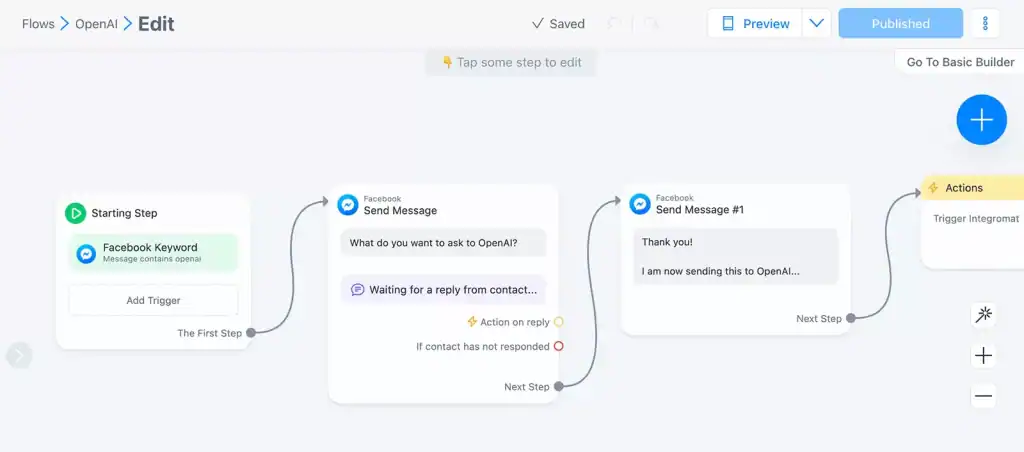
One of ManyChat’s biggest strengths is its drag-and-drop flow builder. Users can design chatbot conversations visually, setting triggers, actions, and responses without needing coding skills.
Instagram Automation
ManyChat stands out for its Instagram automation features. Businesses can auto-reply to DMs, respond to story mentions, and trigger messages from comments. This is especially useful for creators and brands that rely heavily on Instagram engagement.
Live Chat and Human Handoff
ManyChat allows conversations to move from bot to human when needed. If a query becomes complex, a team member can step in and continue the conversation.
Analytics and Performance Tracking
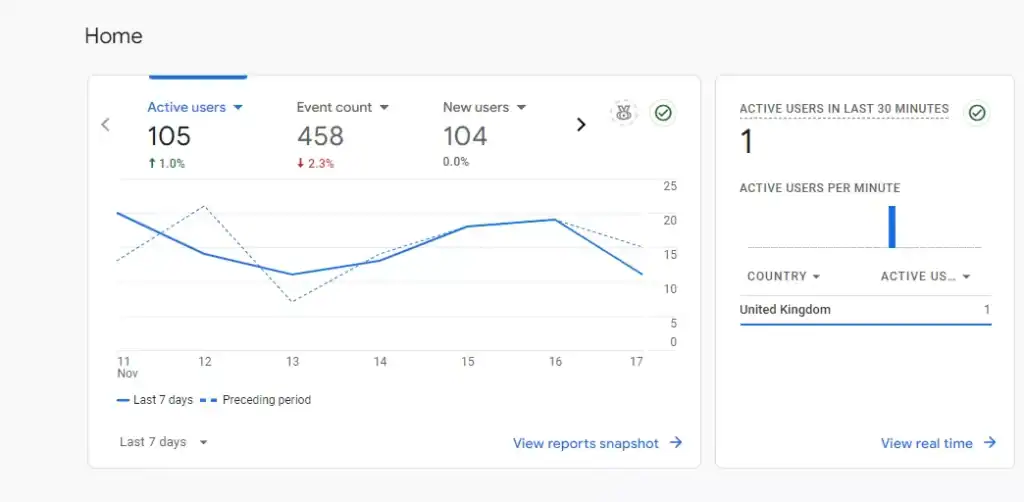
The platform provides insights into how campaigns and automations perform. Businesses can track open rates, click rates, active contacts, and engagement levels.
Who ManyChat Is Best For
ManyChat is a strong fit for users who want to automate marketing conversations without dealing with complex setup or technical tools. It works best for:
- Creators and influencers using Instagram or Messenger to engage their audience
- Small businesses looking to automate DMs and capture leads
- Marketing teams running simple funnels through chat automation
- Brands focused on Instagram automation like auto-replies and comment triggers
- Businesses new to chatbot automation that want an easy starting point
For these use cases, ManyChat offers a simple and accessible way to get started with conversational marketing.
ManyChat Pricing
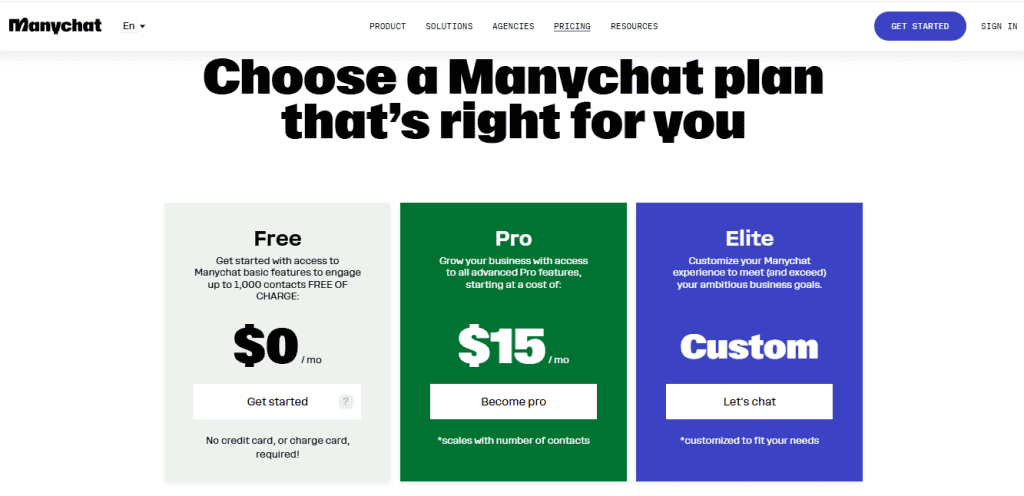
ManyChat offers a simple pricing structure with a free entry point and paid plans that scale based on the number of contacts and features required. This makes it accessible for beginners, but costs can increase as your audience grows.
Free Plan — $0/month
The Free plan is ideal for individuals and small businesses just getting started. It includes:
- Up to 1,000 contacts
- Basic automation flows
- Limited segmentation (up to 10 tags)
- Basic growth tools for lead capture
This plan is enough to test the platform and run simple automation.
Pro Plan — From $15/month
The Pro plan unlocks advanced features and scales with your contact list. It includes:
- Unlimited contacts (pricing increases with size)
- Advanced segmentation and targeting
- Unlimited tags and custom fields
- Access to analytics and performance tools
- Integrations with tools like Shopify, Zapier, and CRM platforms
- Removal of ManyChat branding
Elite Plan — Custom Pricing
The Elite plan is designed for larger teams that need additional support and customization. It includes:
- Dedicated onboarding and support
- Strategic guidance from a customer success manager
- Priority technical support
- Access to expert-built automation
One thing we would like you to note here is that while ManyChat’s entry cost is low, pricing scales with the number of contacts. As your audience grows, monthly costs can increase significantly, which is something businesses should plan for when comparing ManyChat pricing with other tools.
ManyChat Pros and Cons
Like any platform, ManyChat has strengths that make it appealing, as well as limitations that may push businesses to explore alternatives.
Pros
- Beginner-friendly interface
The visual flow builder makes it easy to create chatbots and automation without coding. - Strong Instagram and Messenger automation
ManyChat is particularly effective for automating interactions on Meta platforms. - Flexible integrations
It connects with tools like Shopify, WooCommerce, HubSpot, and Zapier. - Free plan available
Users can start without upfront cost and upgrade as needed. - Good for lead generation and simple funnels
Works well for capturing leads and nurturing them through basic automated flows.
Cons
- Heavy reliance on Meta platforms
ManyChat depends largely on Facebook and Instagram APIs, which can affect reliability if policies change. - Limited advanced automation
While good for basic flows, it lacks deeper workflow automation for complex customer journeys. - No built-in CRM
Customer data management is limited compared to platforms with integrated CRM systems. - Pricing increases with growth
As contact lists grow, costs can rise quickly. - AI capabilities are still limited
While helpful, the built-in AI tools are not as advanced as dedicated automation platforms.
DMly – A Strong ManyChat Alternative
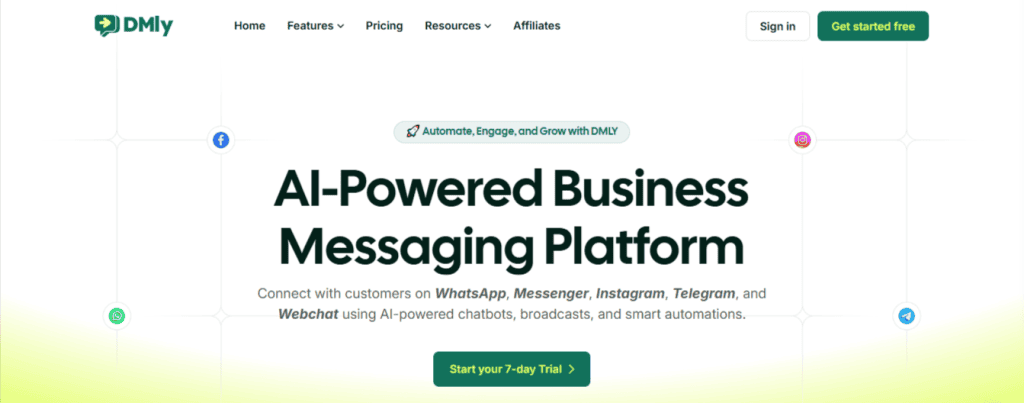
While ManyChat is great for getting started with chat automation, many businesses eventually need a platform that can handle more than just marketing flows. This is where DMly stands out as a powerful ManyChat alternative, especially for teams looking to scale their messaging and automation.
DMly is a conversational marketing and customer engagement platform designed to manage the full customer journey across messaging channels. Instead of focusing only on chat-based funnels, it combines messaging, automation, CRM, and campaign management into one system.
Multi-Channel Messaging
DMly allows businesses to manage conversations across WhatsApp, Instagram, Facebook Messenger, Telegram, and web chat from a single inbox. This gives teams more flexibility compared to platforms that rely heavily on specific channels.

Advanced Automation Workflows
DMly is built around automation. It offers a visual workflow builder that allows businesses to create multi-step customer journeys triggered by actions, behaviors, or campaign interactions.
This goes beyond simple chatbot flows and makes it easier to manage follow-ups, lead nurturing, and customer engagement at scale.

Built-In CRM
Unlike ManyChat, DMly includes a native CRM system. Businesses can store customer data, track conversations, and manage lifecycle stages without needing external tools.
Behavioral Segmentation
DMly enables businesses to segment contacts based on how they interact with messages, campaigns, or products. This allows for more targeted communication instead of relying only on static lists.
Campaign Management and Analytics
The platform also includes tools for running campaigns and tracking performance. Businesses can send broadcasts, monitor engagement, and optimize their messaging strategies using built-in analytics.
DMly vs ManyChat — Quick Comparison
Feature | DMly ($29/m) | ManyChat ($15/m+) |
|---|---|---|
| Omnichannel Messaging | ✅ WhatsApp, Instagram, Messenger, Telegram, Web Chat | ⚠️ Meta-focused |
| Automation | ✅ Advanced workflows | ⚠️ Flow-based automation |
| AI / Chatbot | ✅ AI agents + workflows | ⚠️ Basic AI features |
| CRM | ✅ Built-in CRM | ❌ No native CRM |
| Segmentation | ✅ Behavioral segmentation | ⚠️ Tag-based segmentation |
| Integrations | ✅ API, Zapier, Shopify, webhooks | ⚠️ Good but limited |
| Pricing Model | ✅ Predictable | ⚠️ Scales with contacts |
For businesses that want more control over automation, customer data, and multi-channel communication, DMly offers a more flexible and scalable alternative to ManyChat.
DMly vs ManyChat – Key Differences
Both DMly and ManyChat help businesses automate conversations, but they are built for different stages of growth. ManyChat focuses on marketing automation through chat flows, while DMly is designed to manage complete customer journeys across multiple channels.
Here are the key differences between the two platforms.
Automation Depth
ManyChat uses flow-based automation, which works well for simple funnels like lead capture or follow-up messages. However, these flows can become harder to manage as processes get more complex.
DMly offers advanced workflow automation, allowing businesses to trigger actions based on behavior, campaign interactions, or customer data. This makes it easier to build more dynamic and scalable automation systems.
Platform Dependency
ManyChat relies heavily on Meta platforms like Facebook Messenger and Instagram. While it supports other channels, its strongest features are tied to these ecosystems.
DMly is platform-independent, supporting WhatsApp, Instagram, Messenger, Telegram, and web chat equally. This reduces dependency on a single ecosystem.
CRM and Customer Data
ManyChat allows basic contact management using tags and custom fields, but it does not include a full CRM. DMly includes a built-in CRM, where businesses can track customer data, conversation history, lifecycle stages, and engagement patterns in one place.
Messaging Channels
ManyChat supports multiple channels, but its core strength remains within Meta platforms. DMly provides a more balanced multi-channel messaging system, allowing businesses to manage communication across several platforms from one unified inbox.
Pricing Structure
ManyChat pricing starts low, but it scales with the number of contacts. As businesses grow their audience, costs can increase quickly.
DMly typically starts at a slightly higher entry price but offers more predictable pricing, especially for businesses that expect to scale their messaging and automation efforts.
Use Case Focus
ManyChat is best suited for marketing and lead generation, particularly on Instagram and Messenger. DMly is designed for broader use cases, including marketing, sales, customer support, and lifecycle automation, making it more suitable for businesses that want to expand beyond simple chat funnels.
Why Growing Businesses Choose DMly Instead
Many growing businesses often choose DMly as their preferred messaging automation tool. That’s because as businesses grow, simple chat funnels often aren’t enough. Teams need a system that can handle lead capture, follow-ups, customer support, and ongoing engagement without juggling multiple tools. And in that case, DMly is obviously a more practical choice.
Here’s why many growing businesses move to DMly:
- Built for full customer journeys
DMly lets you automate everything from first message to repeat engagement, not just single chat flows. - Multi-channel messaging in one place
Manage conversations across WhatsApp, Instagram, Messenger, Telegram, and web chat without switching tools. - Built-in CRM for better visibility
Store customer data, conversation history, tags, and lifecycle stages in one system, making personalization easier. - Behavior-based targeting
Trigger campaigns based on how customers interact with messages or products, not just static lists. - Scalable automation without limits
Create multiple workflows and expand your automation without hitting restrictive caps. - Less dependence on a single platform
DMly isn’t tied to one ecosystem, so your messaging strategy isn’t affected by platform changes.
For businesses that want to move beyond basic automation and build a more structured messaging system, DMly offers a clearer path forward.
FAQs
How does ManyChat compare with DMly?
ManyChat is mainly focused on marketing automation through chat flows, especially on Instagram and Messenger. It works well for lead generation and simple funnels. DMly, on the other hand, offers more advanced workflow automation, built-in CRM features, and multi-channel messaging, making it better suited for managing full customer journeys as a business grows.
Who is ManyChat AI for?
ManyChat AI is designed for creators, marketers, and small businesses that want to automate conversations without technical setup. It helps handle common queries, build chat funnels, and engage users, but it’s best suited for basic automation rather than complex workflows.
How much does ManyChat cost?
ManyChat pricing starts with a free plan, while the Pro plan begins at $15 per month. The cost increases as your contact list grows. There is also an Elite plan with custom pricing for larger businesses that need additional support and features.
What is the best ManyChat alternative?
There are several ManyChat alternatives available, but DMly is often considered one of the best options. It offers advanced automation workflows, multi-channel messaging, built-in CRM functionality, and more flexibility for businesses looking to scale.
Does ManyChat support CRM?
ManyChat does not include a full built-in CRM. It offers basic contact management with tags and custom fields, but businesses often rely on integrations with external CRM tools for more advanced customer data management.
Does DMly charge markup on Meta fees?
No. DMly does not add any markup on Meta’s WhatsApp messaging fees. Businesses pay Meta directly, which helps keep messaging costs more transparent and predictable as they scale.