
WhatsApp for D2C: How D2C Brands Are Using WhatsApp to Drive Sales on Autopilot
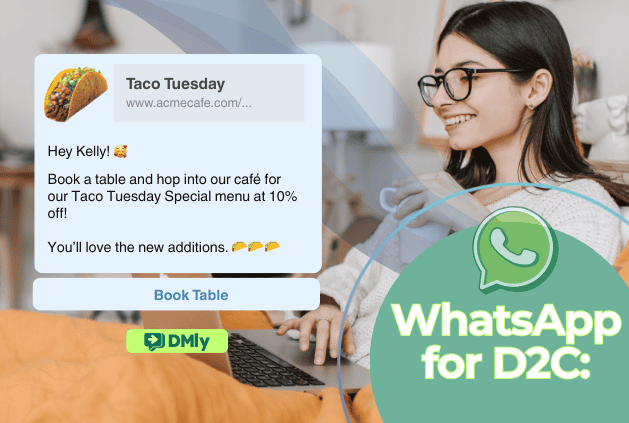
In Direct-to-Consumer (D2C), speed is an essential element. The faster you can turn a question into a checkout, the more revenue you capture. Attention is short. Options are endless. And if a customer has to wait too long for an answer, they’ll buy from someone else.
That’s why more D2C brands are shifting toward WhatsApp.
It’s not just another support channel. It’s where customers already spend their time. It’s where replies are expected instantly. And more importantly, it’s where the entire journey from discovery to purchase can happen inside one smooth conversation.
The fastest-growing D2C brands today aren’t necessarily the ones spending the most on ads. They’re the ones treating WhatsApp as a revenue engine.
In this guide, you’ll learn how D2C brands are using WhatsApp to drive conversions, what conversational commerce actually means in practice, and how to set it up without tearing apart your existing tech stack.
What is WhatsApp for D2C
Most D2C brands still follow the same old flow: Run ads, send traffic to a website, hope the visitor doesn’t bounce, and hope they complete checkout.
That “hope” is expensive.
WhatsApp for D2C flips the model. Instead of pushing customers away from conversation, you bring the entire buying journey into chat. In practice, this means:
- Customers browse products directly inside WhatsApp
- They ask questions and get instant replies
- They receive personalized recommendations
- They complete purchases
- They get delivery updates and support in the same thread
They don’t have to be moving from tabs to tabs, filling long forms, or searching for confirmation emails. Everything happens in one continuous conversation.
That’s a big deal for D2C brands because friction is the biggest conversion killer. The fewer steps between interest and checkout, the better your results.
To access these features, brands use the WhatsApp Business API.
The regular WhatsApp Business App works for small support setups. But D2C brands need automation, product syncing, broadcasts, and integrations. That’s where the API comes in.
You access the API through a Business Solution Provider like DMly, Zoko, Interakt, etc. These platforms layer powerful tools on top of WhatsApp.
With the API setup, you can automate conversations, connect your ERP or Shopify store, sync product catalogs, run targeted broadcasts, trigger abandoned cart reminders, etc.
Even when you’re managing large volumes, it doesn’t feel robotic to the customer. The experience still feels personal because it happens inside a one-to-one chat.
Why WhatsApp Is Quietly Powering the Next Wave of D2C Growth
D2C brands don’t win just because they run ads. They win because they remove friction. And right now, WhatsApp is one of the fastest ways to do that.
Let’s see some reasons why more D2C brands are building serious growth systems around it.
Mobile-First Shopping Has Become Chat-First Shopping
Customers aren’t sitting at desktops comparing tabs anymore. They’re shopping on their phones, in between meetings, and on the sofa while commuting.
That behavior changes everything.
When someone clicks an ad and lands on a slow website with multiple steps, there’s friction. When that same click opens a WhatsApp chat instantly, the journey feels smoother.
Curiosity turns into conversation immediately.
What makes this even more interesting is that chat commerce perfectly aligns with how mobile users naturally behave. They prefer quick questions, instant replies, and fast decisions.
WhatsApp fits that behavior perfectly.
It Combines Marketing, Sales, and Retention in One Channel
Most D2C brands still split their funnel across multiple platforms. Instagram for discovery, email for nurturing, website for checkout, and SMS for reminders.
That’s a lot of handoffs.
WhatsApp compresses the entire journey into one thread. Inside a single conversation, you can:
- Start from a Click-to-WhatsApp ad
- Share product recommendations
- Recover abandoned carts
- Send limited-time offers
- Trigger repurchase reminders
- Share shipping updates
When everything happens at WhatsApp’s speed, buying decisions accelerate. Things happen in minutes instead of days.
Direct Relationships Beat Marketplace Dependency
Marketplaces give you exposure, but they own the customer. If you’re selling on Amazon or other platforms, you don’t control the relationship. You can’t re-engage freely. You can’t build long-term loyalty outside their ecosystem.
But WhatsApp changes that dynamic. Every opt-in becomes a direct line to your customer. You’re not fighting algorithms. You’re not paying repeatedly for retargeting. You’re building a first-party audience you can nurture over time.
D2C brands don’t thrive on one-time purchases. They thrive on repeat buyers. And repeat buyers come from relationships.
Speed Increases Conversion Rates
Speed is often underestimated in D2C. When a customer asks a product question and waits hours for a response, doubt creeps in. They start comparing, reconsidering, and eventually leave.
When they get an instant reply inside WhatsApp, momentum continues. Questions get answered. Objections get handled. Checkout links are shared immediately.
That compression of time between interest and action is powerful. WhatsApp allows brands to operate in real time. And in D2C, real-time converts better.
Put all of this together, and becomes clear why WhatsApp isn’t just a support channel anymore. For many fast-growing D2C brands, it’s becoming the core engine behind awareness, engagement, sales, and loyalty.
Use Cases for D2C Brands on WhatsApp
It’s one thing to say “WhatsApp drives sales.” It’s another to see exactly how D2C brands are using it day to day. Below are the most powerful, practical use cases turning chats into revenue.
1. Conversational Commerce
This is where WhatsApp shines. Instead of sending shoppers to a product page and hoping they navigate correctly, you guide them inside chat.
A customer can:
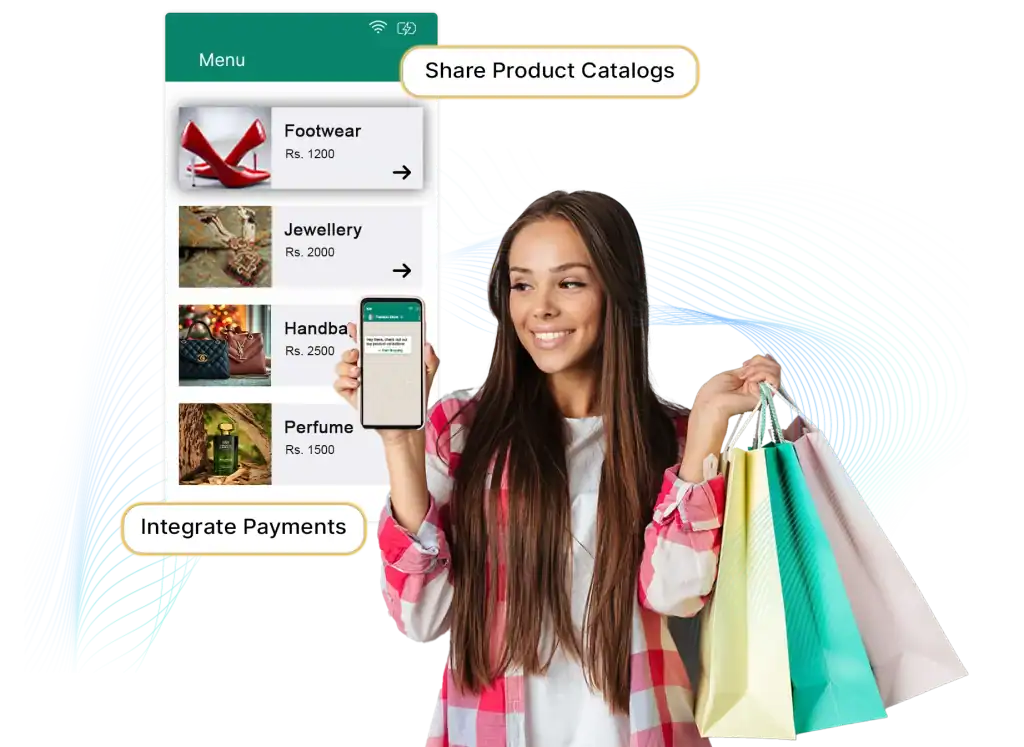
- Browse products
- Ask sizing or pricing questions
- Get recommendations
- Confirm their order
- Receive payment links
- Get confirmation
All inside the same thread, without having to switch between apps or jump from pages to pages.
For D2C brands, this reduces friction dramatically, making the buying process feel guided rather than transactional.
2. Lead Generation and Instant Qualification
Click-to-WhatsApp ads are changing how D2C brands capture intent. Instead of collecting cold leads through forms, brands send prospects directly into chat. From there, automated flows can ask qualifying questions, identify budget and interest, recommend the right product, and route high-intent buyers to a sales rep.
This speeds up the sales cycle significantly.
Many D2C brands running structured WhatsApp marketing funnels report noticeably higher conversion rates compared to traditional email capture flows.
3. Personalization at Scale
Personalization is no longer optional in D2C. WhatsApp makes it easier to automate smart targeting. For example:
- Customers who bought last month get a restock reminder
- Cart abandoners receive a gentle follow-up
- High-value buyers get early access to new drops
- First-time customers receive onboarding tips
All of this can happen automatically. The customer feels understood, and the brand increases repeat purchases without manual follow-ups.
4. Faster, Simpler Payments
Checkout friction kills sales. Every extra redirect increases drop-off.
With WhatsApp, customers can confirm their order and pay in fewer steps. Some setups allow in-chat payment links or integrated checkout experiences.
This helps to shorten buying journeys and produce faster conversions.
For D2C brands, shaving even one step off checkout can significantly impact revenue.
5. Post-Sale Engagement
The sale shouldn’t be the end of the conversation. On WhatsApp, brands can send:
- Order confirmations
- Shipping updates
- Delivery notifications
- Support responses
All in the same thread where the purchase happened. That continuity is what helps build trust.
When customers receive fast replies after purchase, they’re more likely to buy again. And repeat customers are often far more profitable than first-time buyers.
6. Broadcast Campaigns
Email campaigns can sit unopened for days. But that’s not the story for WhatsApp broadcasts. Messages are typically opened quickly, often within minutes, making them perfect for flash sales, limited-time drops, back-in-stock alerts, and seasonal offers.
You just need to know how targeting works. Send the right message to the right segment, and WhatsApp becomes a high-performing promotional channel instead of a noisy one.
Key Benefits of WhatsApp for D2C Brands
Higher conversion rates
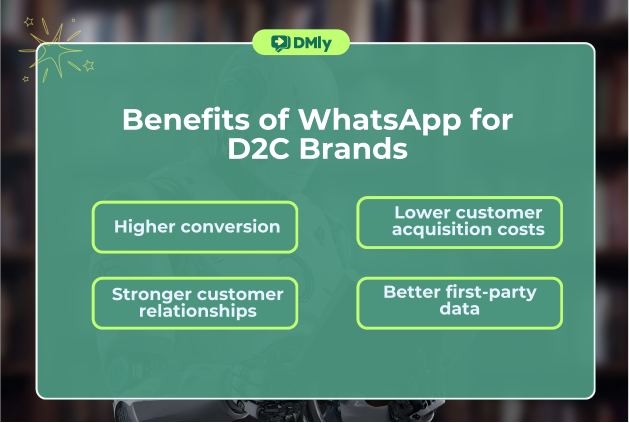
When a customer can ask a question and get an instant answer, they tend to hesitate less. Instead of leaving your site to “think about it,” they stay in the conversation. You can clarify sizing, explain features, suggest bundles, or offer limited-time incentives in real time.
That immediate back-and-forth shortens the buying decision. And for D2C brands, that often means fewer abandoned carts and more completed checkouts.
Lower customer acquisition costs (over time)
Paid ads are getting more expensive. And relying purely on performance marketing makes growth fragile. WhatsApp helps you build a direct audience you own. Once someone opts in, you can re-engage them without paying for another click.
Stronger customer relationships
Because conversations happen in a chat thread, customers feel like they’re speaking to a real brand, not filling out a form. When they receive quick responses and proactive updates, trust builds. Customers are far more likely to return to brands that communicate clearly and consistently.
Better first-party data
Marketplaces and social platforms limit your access to customer data. WhatsApp gives you direct interaction. You can understand:
- What products customers ask about most
- Common objections
- Buying timelines
- Frequently requested features
Every conversation becomes insight. That data can inform product development, marketing messaging, and inventory planning.
How to Get Started with WhatsApp for D2C
If you’re thinking about using WhatsApp for your D2C brand, the good news is this: you don’t need to rebuild your entire tech stack. You just need the right structure.
Step 1: Choose a Business Solution Provider (BSP)
To run WhatsApp at scale, you’ll need access to the WhatsApp Business API. You don’t get that directly from WhatsApp. You access it through a Business Solution Provider (BSP) like DMly, Zoko, Wati, and Interakt.
One name has come off that list, and it is worth saying why rather than just dropping it. This page used to name Flowcart alongside the others. Flowcart is still trading. What changed is that it no longer publishes its plan prices: the tiers on its pricing page now read “Get a Quote”, checked on 8 September 2026. We name providers whose prices you can look up for yourself, so it is not in the list above. An earlier version of this paragraph said Flowcart had stopped trading. That was our error, from checking the wrong domains, and we withdraw it.
When choosing a provider, don’t just look at price. Make sure it offers:
- Automation tools
- CRM or Shopify integration
- Broadcast capabilities
- Payment support
- Detailed analytics
For D2C brands, integration and automation are non-negotiable. You want WhatsApp connected to your store, not running separately from it.
Step 2: Set up and verify your business number
Once you’ve selected a BSP, you’ll need to verify your business. This typically involves connecting a dedicated phone number, submitting company documents, and linking a Meta Business Manager account.
The process usually takes a few days. It’s not complicated, but it’s important. Proper verification ensures your number is trusted and scalable from day one.
Step 3: Connect your e-commerce store
After approval, the real work begins: connecting your store. If you’re using Shopify, WooCommerce, or Magento, your catalog can be synced directly into WhatsApp. That means customers can see product images, prices, and availability inside chat. That reduces friction. And friction reduction is the entire game in D2C.
Step 4: Set up automation flows
Before driving traffic, build your core flows. At minimum, your D2C WhatsApp setup should include:
- Order confirmation messages
- Shipping updates
- Abandoned cart recovery
- Post-purchase follow-ups
- FAQ handling
These flows handle the bulk of repetitive interactions. And that helps keep response times fast without overwhelming your support team.
Step 5: Build your opt-in list
You can’t just message anyone; you need permission. So you need to actively encourage customers to join. Click-to-WhatsApp ads, website prompts, QR codes on packaging, and post-purchase invitations all work well. The key is offering something meaningful in return, such as early access, exclusive drops, or priority support.
Step 6: Track, test, and improve
Finally, treat WhatsApp like a performance channel. Monitor response times, conversion rates, repeat purchase patterns, and campaign engagement. If something isn’t converting, adjust timing, messaging, or targeting. Small refinements can create noticeable lifts in D2C performance.
Why DMly Is Built for Serious D2C Growth on WhatsApp
By now, one thing should be clear. WhatsApp can absolutely drive D2C sales. But only if the infrastructure behind it is solid. That’s where your Business Solution Provider makes all the difference.
DMly isn’t just a messaging tool layered on top of WhatsApp. It’s built specifically to help brands turn conversations into conversions at scale. And for D2C brands, that distinction matters.
Here are some features that make it a strong fit.
Built on the official WhatsApp Business API
DMly gives you full access to the WhatsApp Business API. That means you’re not limited by broadcast caps or manual workflows. You can automate, segment, retarget, and manage thousands of conversations without losing the personal feel customers expect in chat.
Smart automation
D2C growth isn’t just about acquiring customers. It’s about nurturing, converting, and retaining them. DMly allows you to build automated flows that handle:
- Lead qualification
- Abandoned cart recovery
- Order confirmations
- Shipping updates
- Post-purchase follow-ups
- Repurchase reminders
Instead of stitching together multiple tools, you manage everything inside one structured system. And because the flows are visual and no-code, your marketing team can iterate quickly without waiting on developers.
Smart segmentation
DMly enables behavior-based segmentation so you can send the right message to the right customer. Someone who abandoned a cart gets a recovery message. A repeat buyer gets early access to new drops. A first-time shopper gets onboarding guidance. This level of targeting increases conversion rates without increasing ad spend.
Seamless e-commerce integrations
If you’re running Shopify or WooCommerce, DMly connects directly to your store. That means product catalogs sync automatically and inventory updates stay accurate. Your WhatsApp setup becomes an extension of your store, not a disconnected channel.
Omnichannel support
DMly brings WhatsApp, Instagram, Messenger, Telegram, and Webchat into one unified inbox. This makes conversations stay connected, no matter where they start.
Best Practices for WhatsApp Commerce in D2C
Using WhatsApp for D2C isn’t just about turning it on and sending messages. The brands that win treat it like a relationship channel, not a broadcast tool. If you want real results from WhatsApp commerce, focus on these core practices:
- Segment and personalize every message
Don’t send the same update to everyone. Group customers based on purchase frequency, cart value, product interest, or engagement history. A repeat buyer shouldn’t receive the same message as a first-time visitor. - Automate intelligently, but keep it human
Automation is powerful, especially for abandoned carts, order updates, and follow-ups. But the tone matters. Write automated messages the way your team would actually speak. Use natural language. Ask simple questions. Keep it conversational. - Use rich media to reduce friction
WhatsApp supports images, short videos, PDFs, and product carousels. Use them. A clear product image or quick demo video often removes objections faster than text. Visual messages also keep customers engaged longer and increase reply rates. - Stay compliant and respect opt-ins
WhatsApp is permission-based. Always collect clear consent before messaging customers. Never buy lists. Never scrape numbers. And make opting out simple. Protecting privacy isn’t just about compliance. It builds trust, which D2C brands depend on. - Track performance and refine consistently
Don’t treat WhatsApp like a one-time setup. Monitor open rates, reply rates, conversion rates, and repeat purchases.
Conclusion
D2C brands don’t just compete on products anymore. They compete on speed, experience, and how easy they make it for customers to buy.
WhatsApp changes the game because it removes friction. It keeps discovery, questions, checkout, and post-purchase updates in one continuous conversation. No jumping between apps. No waiting days for replies. No losing momentum between interest and action.
The brands seeing the strongest results aren’t treating WhatsApp as a support add-on. They’re treating it as a core sales channel. That’s the real shift.
If you’re running a D2C brand today, the question isn’t whether chat commerce is coming. It’s whether you’ll build your system early enough to benefit from it.
Set it up properly, keep it personal, and optimize it consistently.
Writing about WhatsApp automation, bookings and growth for local business.
Turn WhatsApp into your busiest channel.
Start free and run message, bookings, payments and reviews in one place.
