
How to Boost Retargeting Ad Conversions Using WhatsApp
Most businesses assume the hard part is getting someone to click on an ad.
In reality, that’s often the easy part.
The real challenge begins after the click. A visitor lands on your website, browses a few products, maybe even adds something to their cart, and then leaves. No purchase. No signup. No enquiry. Just another potential customer disappearing into the internet.
And here’s the thing. That’s completely normal.
Most people don’t buy the first time they discover a brand. They compare options, get distracted, check reviews, or simply decide to think about it later. That’s exactly why retargeting exists. It gives businesses a second chance to reconnect with people who already showed interest.
But traditional retargeting ads have a limitation. They keep showing more ads, hoping the next impression finally convinces someone to take action.
WhatsApp changes that.
Instead of repeatedly talking at potential customers through ads, WhatsApp allows you to start talking with them through conversations. In this guide, we’ll explore how businesses can leverage WhatsApp to create more meaningful interactions and ultimately convert more clicks into paying customers.
What Is WhatsApp Marketing and Why Are Businesses Using It?
Unlike most marketing channels that are designed to get attention, WhatsApp is designed to start conversations.
So, WhatsApp marketing is the practice of using WhatsApp to engage customers, answer questions, nurture leads, provide support, and drive sales through direct messaging.
Instead of sending people through a long journey of ads, landing pages, forms, and follow-up emails, businesses can communicate with customers in a channel they already use every day.
That’s a big reason why WhatsApp has become such a powerful marketing tool.
With billions of users worldwide and message open rates that far exceed most traditional marketing channels, WhatsApp gives businesses a rare opportunity to connect with customers in a more immediate and personal way.
But the biggest advantage isn’t just visibility. It’s the ability to have real conversations.
Think about a typical retargeting ad. A customer sees the ad, clicks, visits your website, and leaves again. The ad did its job, but the customer still has unanswered questions.
Maybe they want to know:
- If shipping is available in their location
- Which product option is right for them
- Whether there are hidden fees
- How long delivery takes
- If the product is worth the price
Traditional ads can’t answer those questions. But WhatsApp can.
Instead of pushing customers back into another advertising cycle, WhatsApp lets businesses address concerns directly through conversation. This shortens the buying journey and often removes the barriers that stop people from converting in the first place.
Another reason businesses are embracing WhatsApp marketing is automation.
Using the WhatsApp Business API, companies can automate:
- Lead qualification
- Product recommendations
- Appointment booking
- Customer support
- Follow-up messages
- Retargeting campaigns
This means businesses can stay responsive even when their team is offline.
And because customers receive answers instantly, they’re far less likely to lose interest and move on to a competitor.
At its core, WhatsApp marketing works because it feels less like marketing and more like communication. Customers aren’t being pushed toward a purchase. They’re having a conversation that helps them make a decision.
And when combined with retargeting campaigns, those conversations can become one of the most effective conversion tools a business has.
How to Use WhatsApp to Improve Retargeting Ad Conversions
Most businesses approach retargeting the same way.
A visitor leaves the website, and the business starts showing them more ads. The hope is that repeated exposure eventually convinces them to come back and buy.
Sometimes it works. But often, customers don’t leave because they forgot about your brand. They leave because they still have questions, concerns, or objections that haven’t been addressed.
That’s where WhatsApp changes the game.
Instead of sending people back into the same advertising loop, you can use retargeting ads to start a conversation. And conversations tend to convert much better than impressions.
Here’s how the process works.
Step 1: Track Interested Visitors
The first step is identifying the people who have already shown interest in your business.
This is where tracking tools such as the Meta Pixel come into play. By installing a tracking pixel on your website, you can monitor actions like:
- Product page visits
- Cart additions
- Checkout abandonment
- Form submissions
- Time spent on specific pages
This helps you build highly targeted audiences instead of showing ads to random people.
For example, someone who viewed a product three times but never purchased is a much stronger prospect than someone who bounced after a few seconds.
The goal here is to focus your retargeting budget on people who already demonstrated buying intent.
Interestingly, setting up a Meta Pixel is much easier than most people expect. Let’s take Facebook, for example. If you have to add its Pixel, just:
- Open Meta Ads Manager and navigate to the Events Manager section.
- Click Create Pixel and enter a name for your Pixel.
- Select Install Pixel and copy the Pixel code provided by Meta.
- Paste the code into your website’s header section so it loads across your site. If you’re using platforms like Shopify, WordPress, or WooCommerce, you can often install it through built-in integrations.
- Set up Events to track specific actions such as product views, add-to-cart actions, checkout starts, purchases, and lead form submissions.
- Test the Pixel to make sure it is tracking visitor activity correctly.
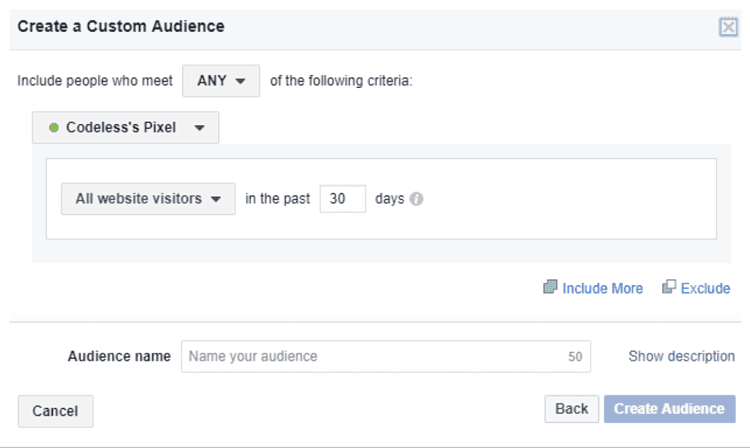
Once installed, your Pixel will start collecting valuable data that can be used to build highly targeted retargeting audiences for your WhatsApp campaigns.
Step 2: Run Retargeting Campaigns Where Your Audience Already Is
Once your audience is defined, the next step is deciding where to reach them.
For many businesses, platforms like Facebook and Instagram remain the most effective retargeting channels because they allow precise audience targeting based on website behavior.
But it’s important that you understand you cannot treat all visitors the same.
Someone who abandoned a cart should see a different message than someone who simply visited a product page. The more relevant your retargeting campaign becomes, the better your conversion rates tend to be.
Step 3: Send Them to WhatsApp Instead of Another Landing Page
This is where many businesses miss an opportunity. Traditional retargeting campaigns often send visitors back to the exact same product page they already left.
But if that page didn’t convince them the first time, why assume it will suddenly work the second time?
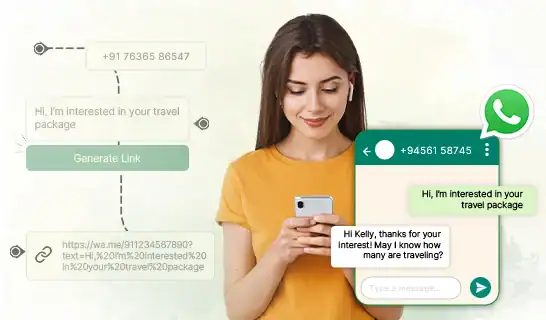
Instead, consider using Click-to-WhatsApp ads.
Rather than directing people back to your website, these ads open a WhatsApp conversation with your business. This changes the entire experience.
Instead of browsing alone, customers can:
- Ask questions
- Request recommendations
- Discuss pricing
- Clarify delivery options
- Get support instantly
The result is a more personal buying experience that removes friction from the decision-making process.
Step 4: Give People a Reason to Start the Conversation
Simply sending people to WhatsApp isn’t enough. You need a compelling reason for them to click.
This could be:
- A limited-time discount
- Free shipping
- Early access to a product
- A bonus gift
- A consultation
- Exclusive pricing
The goal is to make the WhatsApp conversation feel valuable. For example, instead of saying:
“Shop now and save 10%.”
You could say:
“Message us on WhatsApp to unlock your exclusive 10% discount code.”
The second option creates curiosity while bringing the customer directly into your conversation funnel.
Step 5: Use Pre-Filled Messages to Reduce Friction
One of the easiest ways to increase engagement is to make starting the conversation effortless.
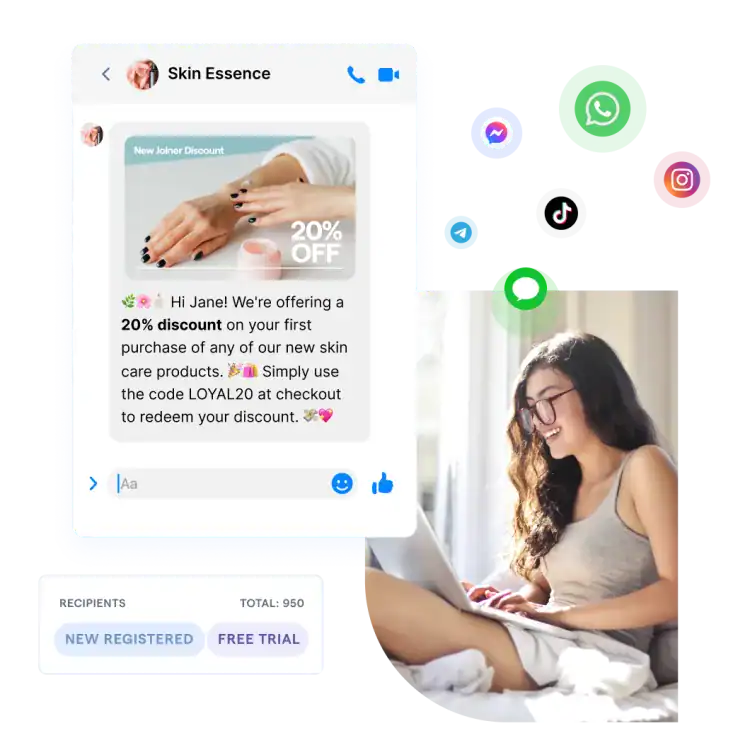
WhatsApp ads allow businesses to use pre-filled messages. For example:
Hi, I’d like to claim the special offer I saw.
Or:
Can you tell me more about the product before I order?
This removes the awkwardness of starting a conversation from scratch and often increases message initiation rates.
Step 6: Automate The First Response
Speed matters. If someone clicks your ad and sends a message, waiting hours for a reply can quickly kill the momentum.
That’s why automation is so important.
Using the WhatsApp Business API, businesses can automatically:
- Deliver coupon codes
- Answer common questions
- Share product details
- Provide shipping information
- Qualify leads
- Route conversations to sales teams
The customer receives an immediate response while your team stays focused on higher-value conversations.
Step 7: Continue The Conversation Until They Convert
Not everyone will buy after the first interaction. And that’s okay.
The advantage of WhatsApp is that you now have an ongoing communication channel instead of relying solely on ad impressions.
If someone doesn’t purchase immediately, you can continue nurturing the relationship with follow-up messages, product recommendations, stock alerts, promotional offers, and helpful content. Over time, these conversations build trust and move customers closer to a buying decision.
Turn More Retargeting Clicks into Customers with DMly
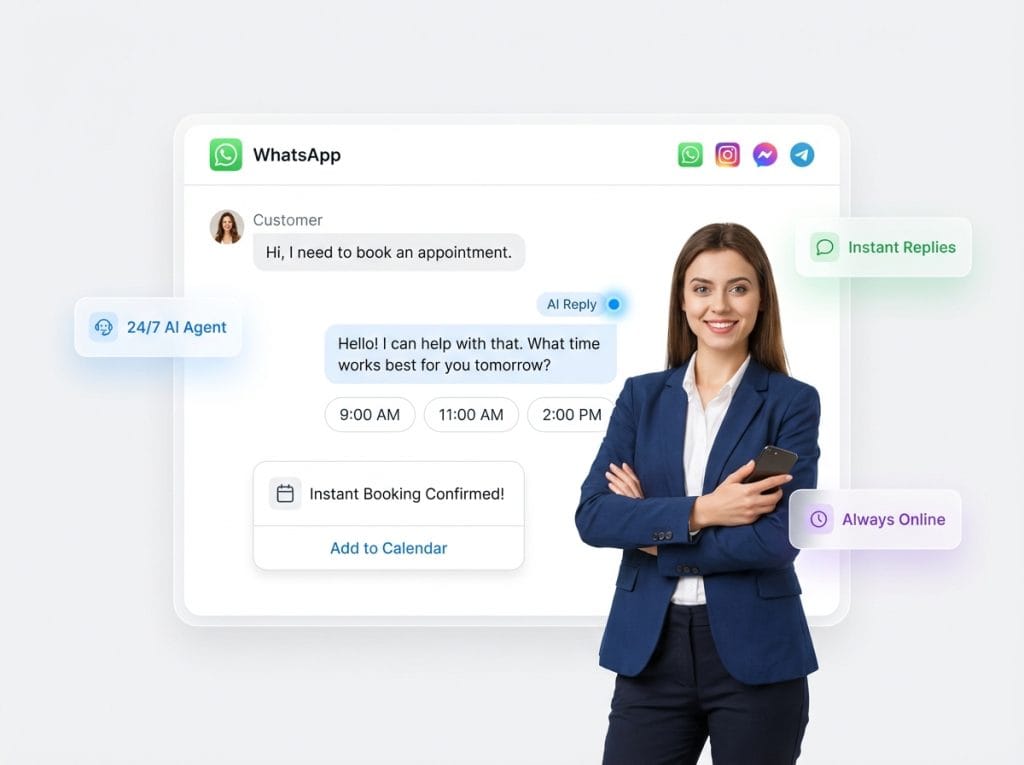
Retargeting works because it keeps your brand in front of interested prospects. But visibility alone doesn’t close deals. At some point, customers need answers, reassurance, and a reason to take the next step.
That’s where conversations make the difference. There is nothing that drives conversions better than conversations. When you are able to engage your customers with genuine conversations, it will be easier to convince them to take the step action. It has a way of creating a frictionless shopping for customers.
DMly can be of great help to businesses in this area.
DMly allows you to connect your retargeting campaigns directly to WhatsApp and automate the customer journey from the very first message. You can build Click-to-WhatsApp campaigns, create automated reply flows, send personalized offers, distribute coupon codes automatically, and engage customers at the exact moment they’re most interested.
And because DMly is built on the official WhatsApp Business API, businesses can scale these conversations while staying compliant with WhatsApp’s policies.
So, while ads create awareness, conversations create conversions. When you combine retargeting campaigns with WhatsApp automation, you’re no longer just chasing clicks. You’re creating opportunities to build trust, answer questions, and turn interested visitors into paying customers.
Frequently Asked Questions
What Is WhatsApp Retargeting and Why Should You Use It?
WhatsApp retargeting is the process of re-engaging people who have already interacted with your website, ads, or business and moving them into a WhatsApp conversation. Businesses use it because conversations often convert better than traditional retargeting ads alone.
How Does WhatsApp Retargeting Work?
Typically, a business tracks website visitors using tools like the Meta Pixel, creates a retargeting audience, and then runs Click-to-WhatsApp ads. When prospects click the ad, they are taken directly into a WhatsApp conversation where they can ask questions, receive offers, and get support.
Are Click-to-WhatsApp Ads Better Than Traditional Retargeting Ads?
Not necessarily better, but often more effective for converting interested prospects. Traditional ads increase visibility, while Click-to-WhatsApp ads create direct conversations that can address objections and move customers toward a purchase faster.
Can WhatsApp Retargeting Be Automated?
Yes. Using the WhatsApp Business API and platforms like DMly, businesses can automate replies, send discount codes, qualify leads, answer FAQs, and follow up with prospects automatically.
What Types of Businesses Benefit Most from WhatsApp Retargeting?
Almost any business can benefit, but it works especially well for e-commerce stores, service businesses, SaaS companies, healthcare providers, educational institutions, and real estate businesses. It actually works for any company that relies on customer conversations before a purchase.
Is WhatsApp Retargeting Expensive?
Not usually. In many cases, it’s more cost-effective than continually increasing ad spend because you’re focusing on people who already showed interest in your business. Better targeting and direct conversations often lead to higher conversion rates and improved return on ad spend (ROAS).
Writing about WhatsApp automation, bookings and growth for local business.
Turn WhatsApp into your busiest channel.
Start free and run message, bookings, payments and reviews in one place.
